






“One of the pioneering firms in web3 solutions, digital assets and tokenization, recognized for its innovation and solid reputation across Spain and Latin America.”

Jorge CorredorLawyer, Rincón Cuéllar & Asociados
We build blockchain products for companies in Switzerland with our in-house team, starting from how Swiss law recognises ledger-based securities and from a map of FINMA permissions that changes with each activity.
Tell us about your project
We turn your use case into a product you can launch, operate and extend. One team designs the architecture, writes the contracts and integrates them with your systems.
Tell us what you want to buildWe design the register around what Article 973d asks for: a registration agreement, the holder's power of disposal, integrity and access to information. We also separate who holds custody, who contracts with the client and which affiliation or licence covers each function.
We build your business logic with tests and peer review, and prepare every contract, documented, for an external audit and a staged deployment before it reaches production.
You work in English, or in Spanish if your team prefers, directly with the people who design and write the code. Meetings go into your calendar within your working day, and the rest stays in shared documentation and a stable technical channel.
We document the code and plan deployments and monitoring, so your team can maintain the product and add features on a foundation it understands.
We cover the full Web3 product lifecycle: idea, MVP, mainnet deployment, audits and maintenance.
Cases that build on marks and records Switzerland already requires, from the casein label on Gruyère to the melter's stamp on every bar.

Since February 2021, Article 973d of the Code of Obligations lets a share be exercised and transferred through a register, under a registration agreement between the parties.
Blockchain for Banking & Finance
Every wheel of Gruyère AOP carries a casein mark with its production date, its number and the dairy's number; the record starts from that mark and follows the wheel through ageing.
Blockchain for Agribusiness
Since 2017, a Swiss made watch needs at least 60% of its manufacturing costs generated in Switzerland and its technical development done there; the record documents that origin per piece.
Blockchain for Fashion & Luxury
On import, ingots and bars must bear the stamp of a licensed melter or an assayer, a fineness mark and the name of the metal; the record links each bar to those details.
Blockchain for Supply Chain & LogisticsOur stack covers every layer of your product: smart contracts, blockchain networks and integration with your systems. It is what we use to build, test and deploy software tailored to your business.
The smart contract language for verifiable rules on EVM networks.
Performance and memory safety for contracts, nodes and Web3 tooling.
EVM contracts, tokens and final settlement on an open Proof of Stake network.
An environment to compile, test and deploy contracts on EVM networks from Node.
Solidity tests, invariant fuzzing and command-line tooling for EVM networks.
Oracles for external data, randomness and cross-chain messaging for contracts.
Polygon PoS: EVM contracts secured by its own validators, with low fees.
Programs, accounts and parallel execution on a high-throughput layer 1.
Audited Solidity contracts for tokens, access control and upgradeable systems.

Switzerland is not part of the EU or the EEA: MiCA does not apply and a Swiss licence gives no European passport. Since 2021, the Code of Obligations has recognised ledger-based securities (Article 973d), provided there is a registration agreement and a system that protects their integrity. The permission depends on the activity: membership of a self-regulatory organisation for AML supervision, a FinTech or banking licence for deposits and custody, and a FINMA DLT trading facility licence for trading DLT securities.
See blockchain regulation in SwitzerlandThe dates on which Switzerland recognised ledger-based securities and authorised the first infrastructures to trade them. Each milestone links to its source.
See the regulation guide for SwitzerlandCivil law provisions of the DLT reform, including Article 973d, enter into force.
SIF · Partial commencementThe remaining reform and its ordinance enter into force, including infrastructure and insolvency rules.
SIF · Full commencementFINMA announces approval of SIX Digital Exchange AG as a central securities depository and SDX Trading AG as an exchange. These differ from BX Digital’s later DLT trading facility permission.
FINMA · Announcement of 10 September 2021The first DLT trading facility licence is announced. Its scope depends on the permission granted.
FINMA · Authorisation announcement“One of the pioneering firms in web3 solutions, digital assets and tokenization, recognized for its innovation and solid reputation across Spain and Latin America.”
“We structured the tokenization of real estate projects with them, and I value the team's ability to understand our corporate needs and genuinely solve them.”

“They advised us on the feasibility of tokenizing real estate assets in Uruguay with direct, cordial treatment. A professional team, responsive and always available.”

“Great professionals at structuring tokenized projects, with technical command and attention to detail that inspire full confidence at every stage of the work.”

“As a blockchain lawyer, I value their experience and professionalism in consulting and executing tokenization projects. Technology partners you can fully trust.”

“Great professionals, very attentive to their clients and always mindful of every detail. Working with their team has been a genuine pleasure from start to finish.”

“A very professional yet approachable company that empathizes with your doubts and needs. Highly recommended for entrepreneurs with a tokenization project.”

“Exceptional in every sense. From legal support I value their rigor and transparency: working with Metlabs means professionalism, innovation and security.”

“Excellent service across blockchain development, asset tokenization and consulting. A very professional team that I recommend wholeheartedly, without reservation.”

“I have worked with them on several projects and they are very professional. A guarantee that everything turns out perfectly. Without a doubt, 100% recommended.”

“One of the pioneering firms in web3 solutions, digital assets and tokenization, recognized for its innovation and solid reputation across Spain and Latin America.”
“Great professionals at structuring tokenized projects, with technical command and attention to detail that inspire full confidence at every stage of the work.”
“A very professional yet approachable company that empathizes with your doubts and needs. Highly recommended for entrepreneurs with a tokenization project.”
“I have worked with them on several projects and they are very professional. A guarantee that everything turns out perfectly. Without a doubt, 100% recommended.”
“We structured the tokenization of real estate projects with them, and I value the team's ability to understand our corporate needs and genuinely solve them.”
“As a blockchain lawyer, I value their experience and professionalism in consulting and executing tokenization projects. Technology partners you can fully trust.”
“Exceptional in every sense. From legal support I value their rigor and transparency: working with Metlabs means professionalism, innovation and security.”
“They advised us on the feasibility of tokenizing real estate assets in Uruguay with direct, cordial treatment. A professional team, responsive and always available.”
“Great professionals, very attentive to their clients and always mindful of every detail. Working with their team has been a genuine pleasure from start to finish.”
“Excellent service across blockchain development, asset tokenization and consulting. A very professional team that I recommend wholeheartedly, without reservation.”


Every delivery goes through the same checklist before it reaches mainnet. What changes between projects is the depth of each control, because an MVP does not carry the same risk as a contract that holds third-party funds.


What we are asked before a project starts.
Talk to our teamThere is no single authorisation. If the token embodies a right, Article 973d of the Code of Obligations sets how it is exercised and transferred through the register; if you act as a financial intermediary, the anti-money laundering act requires membership of a self-regulatory organisation, and taking deposits, holding client assets or trading DLT securities calls for FINMA licences. For EU clients, a Swiss licence does not replace MiCA authorisation. We analyse the fit of your case before writing any code.
Yes. We support startups from MVP validation to a product they can show in a funding round, and established companies on tokenization, traceability and digital identity projects with strict compliance requirements. In every case, smart contracts go through tests and review before they reach mainnet.
In English or Spanish, in direct contact with the people who design and build the product. Meetings are set within your business hours. Shared documentation, written decisions and a stable technical channel keep the work moving.
The timeline depends on product complexity, integrations and the level of review required. Before development we define the scope, dependencies and deliverables of each phase, so you can decide what reaches production first and what waits for a second iteration. That way an MVP is never mistaken for a complete architecture.
We do not choose the network by trend. For EVM projects we assess Ethereum, Polygon, Arbitrum or Base on finality, costs, tooling, interoperability, custody and compliance, and we consider non-EVM networks when they fit better. The recommendation covers contracts, indexing, wallets and operations, and comes from the product requirements and who will use it.
Tell us about your case and we'll propose architecture, timeline and budget within a week.
We work remotely with teams throughout the country, and on site where the project calls for it.

Rights, company form, DLT records and funding routes: criteria for structuring a company issuance without assuming liquidity.

What OpenZeppelin libraries and ERC-3643 controls provide, and what a securities issuance also requires: rights, permissions, operations and review.
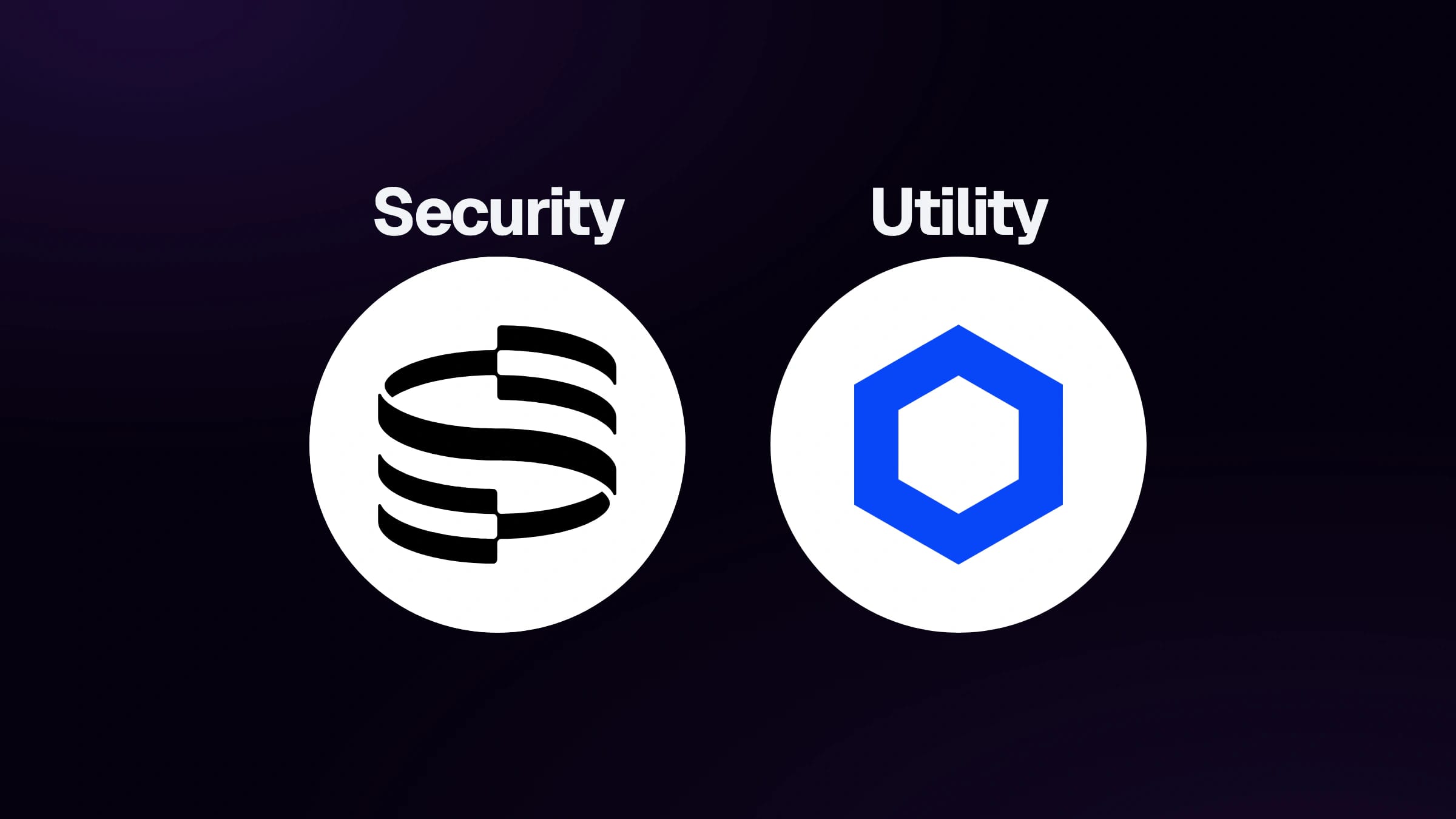
How to distinguish financial rights from service access, what legal classification examines and why a token’s name does not determine its regulation.


Metlabs Offices
Av. García Sabell, 1, Edificio Proa 15009 A Coruña, Spain
As featured in