Independent judgment
Your team can assess a project without relying on the vendor selling it. They learn to distinguish a viable use case from one that only sounds convincing.

Money and assets still move on rails built half a century ago. We train the teams building the new ones and those already operating on them.
Let's design your programYour team can assess a project without relying on the vendor selling it. They learn to distinguish a viable use case from one that only sounds convincing.

Decisions get remade when leadership and engineering understand different things. We put both in the same session, on purpose.

Your team learns to distinguish crypto-assets from financial instruments and identify which regulatory framework to assess before designing the product.

We teach what carries real load and where it breaks. If something does not suit your case, we say so in the session.
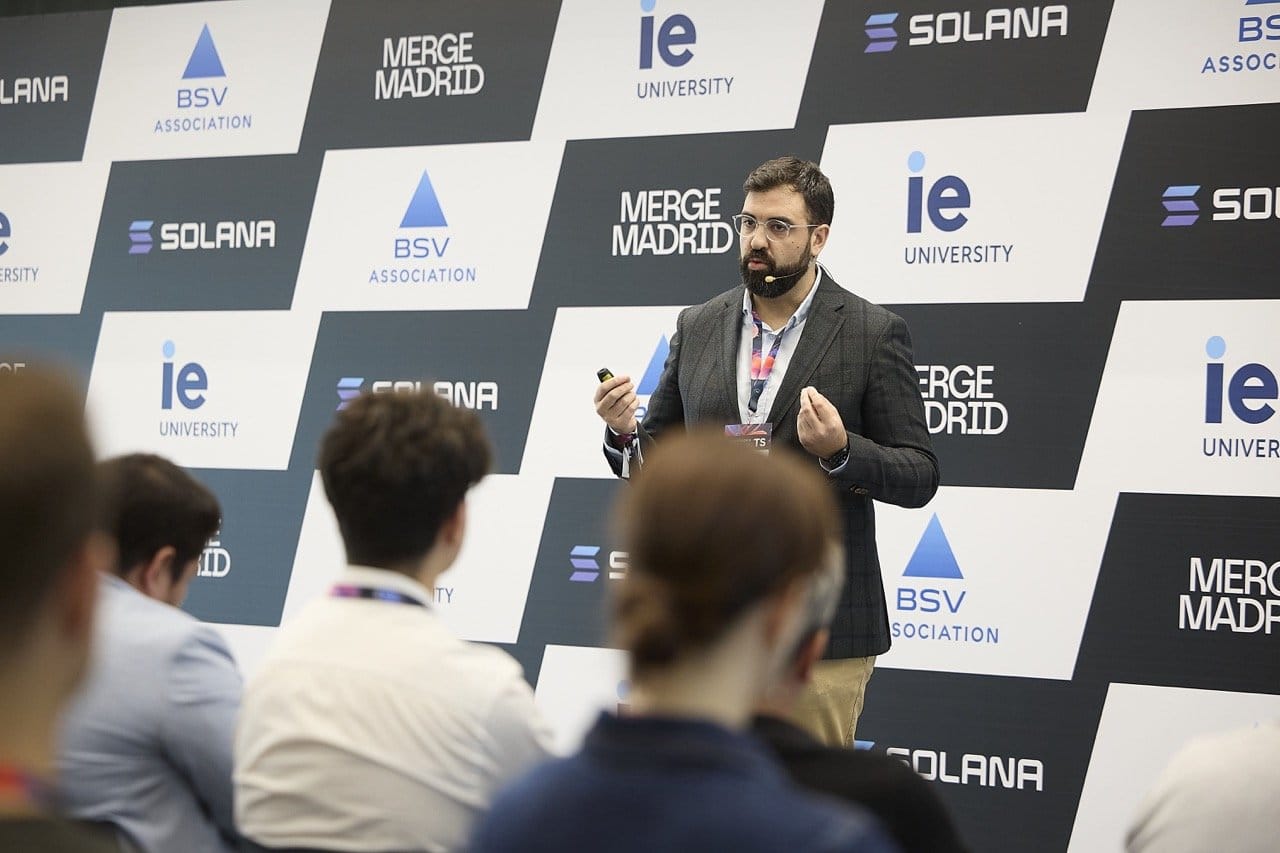
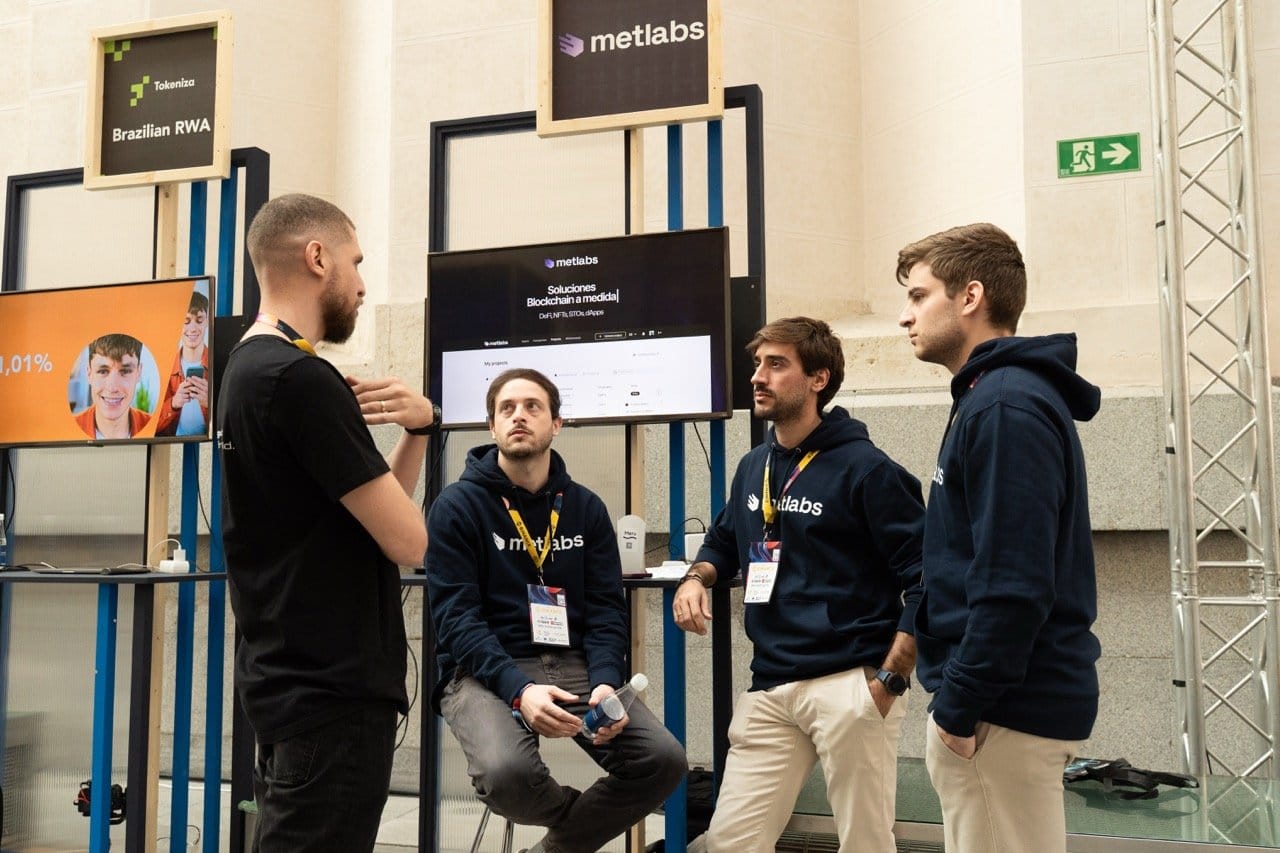
Our corporate blockchain training is a tailored program for leadership, business and technical teams. It combines live sessions, online or on site, with hands-on practice on a test network. Depending on your goals, it covers fundamentals, asset tokenization, smart contracts and regulation, then applies what your team learns to the decisions facing your company. We start with a conversation about what your team already knows, who needs to attend and which decisions you face. The people delivering the training also build the projects, drawing on +30 projects in production and +$40M in tokenized assets.
Let's design your program
Leadership, business, legal and engineering share the room and much of the content, but each profile leaves with a different question answered. Leadership knows whether to go ahead and where to start. Business defines the use case. Legal gets a reading of the rules that apply. And engineering knows what to build.
Everyone takes part in testnet practice, with exercises adapted to their role, existing knowledge and the goals of the program.
Where each model creates opportunity and how much risk the company takes on by entering.
Takeaway. Knows whether the move makes sense and which use case to start with.
The full path of the money, from issuance to settlement, and how value is represented in a token.
Takeaway. Has a prioritized use case and the requirements for the first product.
The European crypto-asset framework, including MiCA, tokenized securities and anti-money laundering rules, applied to your activity.
Takeaway. Knows which obligations apply and what to take to your legal adviser.
Which network and which token standard fit the product, with hands-on practice on a test network.
Takeaway. Knows what to build and how it runs once it is in production.
Blockchain training for companies should start with the decision the team needs to make. We organize the offer into six paths covering adoption, an active project, development, executive judgment, regulation and ongoing support. The first covers the full cycle. The others go deeper into a specific need.
Complete route
Builds a shared language between leadership and technology before priorities are set. The path starts with blockchain infrastructure, moves through tokenization and stablecoins, compares relevant references and finishes by defining an MVP with preliminary requirements.
Learning plan
From digital systems to blockchain networks. Bitcoin, Ethereum, wallets, keys and the operational differences between Web2 and Web3.
How an asset or right is represented on-chain. Real world assets (RWA), tokenized debt and equity, stablecoins, decentralized finance (DeFi) and criteria for assessing utility.
Layer 1 (L1) and layer 2 (L2) networks, public or permissioned environments, costs, custody and regulatory context. Comparison of relevant projects inside and outside the sector.
Prioritization by value, feasibility and risk. Functional scope, actors, flows, open decisions and preliminary requirements for the first product.
Direct application
Starts from a product that has already been chosen and works through its real operation. The team reviews the instrument, money flows, custody, technical governance and the decisions that still block execution.
Learning plan
Reading smart contract audits, critical vulnerabilities, roles, permissions, authorization policies and institutional key management.
Native tokenization versus real world asset (RWA) representation, rights attached to the token, allocation of control and the operational consequences of custody failure.
Issuance, investment, settlement, coupon distribution, corporate actions, fee structure and the path of money between bank and wallet.
Application to the client's architecture, resolution of accumulated questions, open dependencies, accountable owners and the order of next steps.
Building
Practical blockchain development training for teams that will write and maintain code. The program focuses on EVM and Solidity or Solana, covering execution, testing, security and deployment.
Learning plan
Ethereum Virtual Machine (EVM) or Solana architecture, accounts, transactions, state, fees and the execution lifecycle of contracts or programs.
Project structure, on-chain logic, events, wallet integration and the connection between contracts, interfaces and external services.
Unit and integration tests, permission controls, common vulnerabilities and review of critical decisions before deployment.
Moving from testnet to production, key management, costs, monitoring, upgrades and incident response.
Executive decision
Blockchain training for executives evaluating an initiative. The workshop covers opportunity, operating model, costs, risks and governance to decide whether the project should move forward.
Learning plan
Shared records, traceability, digital ownership and executable rules. Differences between a database, a permissioned network and a public network.
Relevant sector cases, the asset or right represented, actors, value flow and the conditions required for the model to be useful.
Build and operating costs, external dependencies, custody, keys, regulatory exposure and the ability to change the rules of the system.
Assessment of strategic fit, feasibility and risk. A reasoned recommendation to explore, validate, build or stop.
Compliance
Organizes the regulatory framework around the activity and turns it into operational questions for product, risk and compliance. The training explains the context and obligations but does not replace formal legal advice.
Learning plan
Differences between a crypto-asset, financial instrument and tokenized right. The classification determines which framework must be analyzed.
Scope of the Markets in Crypto-Assets Regulation (MiCA), its boundaries with financial instruments and the role of the EU pilot regime for distributed ledger technology (DLT) market infrastructures.
Know your customer (KYC), anti-money laundering, wallet controls, allocation of responsibilities and the evidence the operation needs to retain.
Custody, governance, disclosure and recordkeeping obligations. Review of regulatory changes that may affect the product or its operation.
Continuity
An available format for teams that have completed training and are now executing. Recurring sessions review decisions, resolve new questions and keep business, technology and vendors aligned.
Learning plan
Periodic review of assumptions, decisions, blockers and scope changes that affect the product or architecture.
Resolution of questions about infrastructure, contracts, wallets, flows, security and the day to day operation of the solution.
Support translating business needs into technical decisions and reviewing discussions with vendors and internal teams.
Documentation of agreements, owners, open decisions and actions that must be completed before the next checkpoint.
A common foundation, a different learning path.
Every program includes live sessions, online or on site, initial discovery and hands-on test network practice. Your team receives supporting materials, session notes and a final document applied to your case.
We select topics around your team's knowledge and the program's goals, from fundamentals to tokenization, regulation and smart contract development.
From digitalization to blockchain, Bitcoin, Ethereum and the move from Web2 to Web3. Wallets and keys. What really changes and what is noise.
L1 and L2 networks, public and permissioned. Gas costs, nodes, interoperability and oracles. What each choice means in operation.
Tokenization of debt, funds and equity, token standards for regulated securities, stablecoins and central bank digital money.
Issuance, distribution, custody and settlement. Corporate actions, coupons, fee structure and accounting. The full path of the money.
Reading an audit report without being a developer. Critical vulnerabilities, institutional wallets, roles, permissions and key management.
European crypto-asset framework, pilot regime and tokenized securities, anti-money laundering, taxation and comparison across jurisdictions.
Solidity and the EVM, Solana, testing, security, deployment and operation. For teams that will write and maintain the code.
Reading the chain with an explorer, following an operation end to end and knowing what evidence stays on record for audit and internal reporting.
Cases by industry, benchmarking of international references, prioritization and definition of the first product requirements.
We start with your company’s goals and your team’s existing knowledge. We design a tailored learning path and adapt it to the needs that emerge during the sessions.
Before proposing anything, we talk. What your team already knows, who will be in the room, what you have to decide and by when.

We build the program for your company. Blocks, depth, examples from your sector, format and calendar, to review before starting.

We deliver live online sessions or on-site training at your company, building up step by step. We collect questions at the end of each session and adjust the next one.

The last session moves everything onto your case. You keep material and minutes from each session, plus a document with decisions and open points.


The training connects learning with the decisions facing your project. We work with your team to define product requirements, document technical decisions and create a roadmap for implementation.
The scope of the deliverables is agreed in the tailored training proposal. Your team also receives supporting materials and session notes.
A product requirements document (PRD) covering goals, users, use cases and product scope. A shared basis for aligning business and engineering and preparing for development.
The blockchain architecture decisions, transaction flows, integrations and security considerations for the project. We document assumptions and technical questions that need validation.
Priorities, dependencies and next steps for project implementation. An action plan with accountable owners, decisions made and points that still need validation.
Online and on-site blockchain training from specialists working in consulting and development. We tailor the program to the decisions facing your company.
An open-enrollment blockchain course typically follows a shared syllabus and schedule. In-house training is designed around your team and the decisions facing your company. At Metlabs, we bring leadership and technical staff together, adapt the content to your use case and finish with a document covering decisions and next steps.
| Open-enrollment courseFor someone training on their own | Tailored trainingFor a company that has to decide on a specific project | |
|---|---|---|
| Syllabus | Fixed, the same in every edition | Built for your case after discovery |
| Schedule | Fixed enrollment dates | Agreed with you in the proposal |
| In the room | Enrollees from different companies | Your team, with leadership and engineers together |
| Pricing | Usually per attendee | Per program, with the group agreed in the proposal |
| Who teaches | The provider's teaching staff | Whoever works on each area in projects in production |
| At the end | Diploma or certificate, depending on the program | Materials and minutes for each session, plus a document with what was decided and what is still open |
Flows, assets and regulation change a lot from one sector to another. The examples in every program come from yours.

Bonds and funds issued, traded and settled on one and the same network.

Shares in a property, with the owner of each one on the record.

Every shipment tracked end to end and payment released on arrival.

The origin of every kilowatt certified and its trading fully automated.

Policies that trigger themselves the moment the agreed terms are met.

Medical records and drug batches that can be verified in seconds.
Training is one piece. We support companies across the full lifecycle of a blockchain project, from strategy to production.

We analyze your project, validate its viability and design the technology strategy with a clear roadmap for execution.

We guide you through regulation and compliance, translating legal requirements into programmable on-chain functionality.

We build your blockchain product end to end, from UX/UI design to full stack and smart contracts, all the way to production.

We tokenize your assets with ERC-3643 smart contracts, KYC/AML and on-chain governance to fractionalize them and raise capital.

We audit your smart contracts: we validate the logic, detect vulnerabilities and deliver an actionable report before mainnet.

Choose training by the outcome you need: fundamentals, contracts or applications. Compare syllabus, versions, practice and assessment. A certificate does not replace a verifiable project or guarantee employment.

Protocol, smart contract and application roles: what each blockchain developer does, how to assess experience and what to compare when hiring.

How to compare blockchain developer salaries by responsibilities, market and contract, and distinguish base pay from conditional compensation.
Tell us who needs training and what you have to decide. We will propose a program built for you.


Metlabs Offices
Av. García Sabell, 1, Edificio Proa 15009 A Coruña, Spain
As featured in