Who is Sandeep Nailwal? Polygon founder
Sandeep Nailwal and Polygon’s history: Matic’s origins, co-founders, Polygon PoS, the transition to POL and ecosystem development.
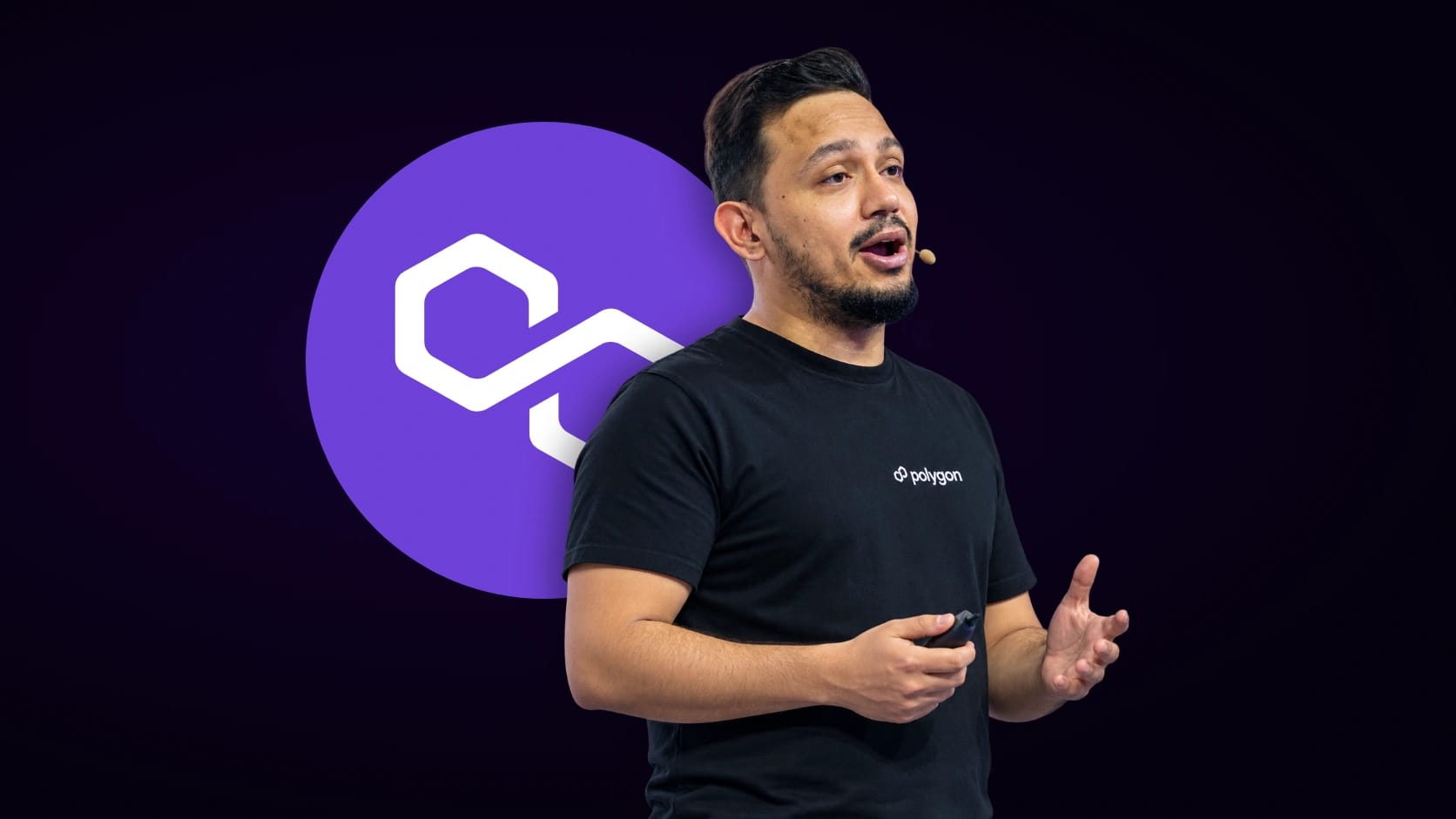
Sandeep Nailwal is a cofounder of Polygon, the project that began as Matic Network and sought to expand the space for applications compatible with Ethereum's tools. His career combines building a product and an ecosystem: helping technical infrastructure find developers and real uses.
That adoption work has a value of its own: a useful network needs more than available capacity. Applications, tools and integrations turn a technical proposal into an option for other teams. The path from Matic to Polygon allows that work to be examined alongside the guarantees of each architecture.
Who is Sandeep Nailwal?
Sandeep Nailwal co-founded Polygon, the project that began as Matic Network. Polygon’s published history identifies Nailwal, Jaynti Kanani and Anurag Arjun as founders in 2017. Mihailo Bjelic later joined as a co-founder during Polygon’s expansion.
The project’s institutional page lists Nailwal as co-founder and CEO of Polygon Foundation, and Marc Boiron as CEO of Polygon Labs. These are different roles and organizations. Calling Nailwal simply the CEO of all Polygon obscures that structure.
His public role has focused on the ecosystem, strategic direction and relationships with developers and businesses. Architecture and implementation belong to multiple teams; they should not be attributed to a founder as if he personally built every component.
What problem did Matic Network address?
The initial problem was making applications connected to Ethereum’s ecosystem more usable. When every interaction requires a transaction, high fees or unpredictable waiting times can shape the entire product, especially when users perform many small operations.
Matic worked on infrastructure compatible with that environment. Compatibility allows contracts and tools to be reused, but does not mean identical security. That distinction is essential to understanding both the original project and Polygon’s later development.
Nailwal’s organizational contribution involved helping the infrastructure find teams that would use it. A network needs developers able to integrate wallets, deploy contracts and maintain applications. Ecosystem work connects technical research with those practical uses.
Why did Matic become Polygon?
The 2021 rebrand accompanied a broader ambition: moving beyond identification with one solution toward several approaches to scaling and connecting networks. The name came to cover different technologies rather than one uniform architecture.
Polygon brings together technologies with different guarantees. Polygon PoS, a rollup built using ecosystem tools and an interoperability layer are different systems. A shared name does not establish where transactions execute, where data is published or who controls upgrades.
A team selecting infrastructure should begin with the specific component and version. A roadmap expresses an intention; a deployed capability requires verifiable documentation and implementation.
Polygon PoS is not an Ethereum rollup
The Polygon PoS documentation describes an EVM-compatible chain with its own validator set, connections and checkpoints to Ethereum. It should not be presented as if every transaction automatically inherits Ethereum’s execution guarantees.
A rollup uses a different model for data publication and state verification or challenges. That does not make all rollups identical either: administrative permissions, data availability and system maturity still matter. A proper comparison examines those mechanisms separately.
This connects Nailwal’s story with Vitalik Buterin’s while keeping their contributions distinct. Polygon grew around needs within Ethereum’s ecosystem; it does not replace Ethereum, and its solutions are not all equivalent layer 2s.
From MATIC to POL and toward interoperability
The transition from MATIC to POL introduced another change that needs a date. The migration documentation scheduled September 4, 2024 for the native-token transition on Polygon PoS. Conditions differed depending on the network holding the tokens; this was not one identical operation for every case.
POL has functions within the infrastructure and does not represent equity in Polygon Labs or Polygon Foundation. A token change also does not independently establish better usability or application security. Those properties require separate assessment.
Interoperability efforts extend the objective toward networks exchanging messages and coordinating assets. The product questions remain concrete: which evidence the destination accepts, who validates the message and what happens if one part stops. Connecting chains does not remove their different trust assumptions.
What does his ecosystem work show?
Support and funding programs form part of this history. The Polygon Ventures announcement describes the ecosystem’s role in backing new teams. It establishes an ecosystem-building strategy, not sustained adoption for every announced investment or integration.
The same applies to business partnerships. A pilot, an announced collaboration and a product with recurring users are different milestones. Assessing a founder’s work requires following what was implemented and what changed afterward, rather than accumulating partner logos without context.
Sandeep Nailwal’s contribution
Nailwal represents a part of blockchain history that can receive less attention: turning infrastructure into an ecosystem of teams able to build on it. His contribution belongs alongside the technical work of his co-founders and the developers behind the different solutions.
The lesson for a project has two parts. Reducing friction helps applications find users, while accurately communicating dependencies helps users and developers understand what they are using. Polygon’s history is clearer when both responsibilities remain visible.

Got a blockchain project in mind?
From idea to product, strategy and technology must move forward together.