Who is Vitalik Buterin? Ethereum co-founder and his role
Vitalik Buterin’s story, his contribution to Ethereum and the work of its co-founders. From the whitepaper to governance and the limits of his influence.
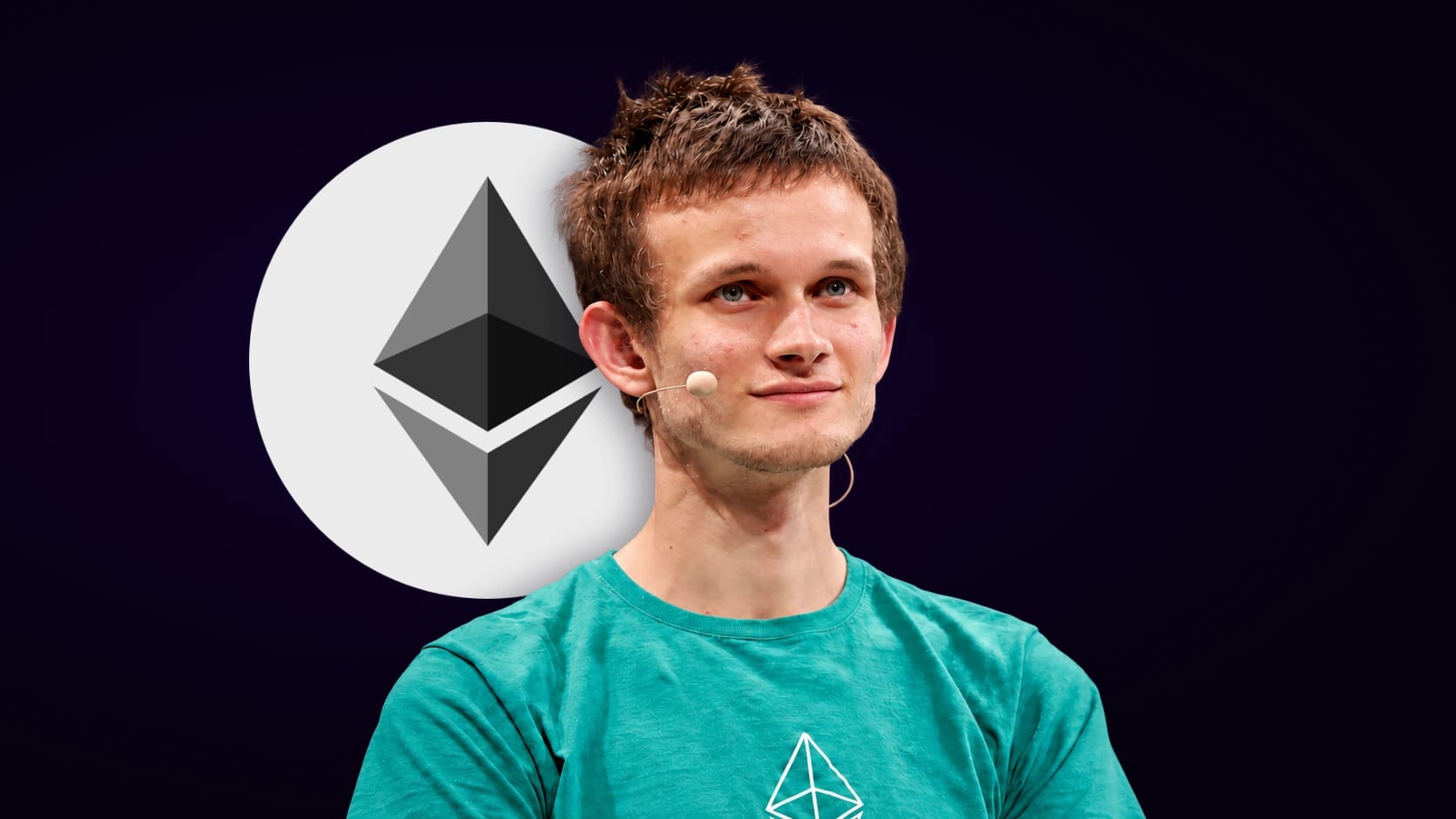
Vitalik Buterin is one of Ethereum's cofounders and the author of its initial proposal. In 2013, he proposed a shared network where developers could program rules for different applications without creating a new blockchain network for each one. Ethereum grew from that idea.
The proposal deserves a prominent place in the history of programmable networks: it opened the possibility for other developers to build on common infrastructure. Turning it into a network required cofounders, researchers, software teams, validators and users. That collective work explains both its reach and the limits of Buterin's influence.
Who is Vitalik Buterin?
Vitalik Buterin is a programmer, author of the original whitepaper and one of the eight co-founders of Ethereum. Born in Russia in 1994, he grew up in Canada. Before Ethereum, he wrote about Bitcoin and co-founded Bitcoin Magazine, work that helped him examine the possibilities and constraints of early blockchain applications.
His role combines research, technical proposals and public discussion. He can influence the ecosystem’s priorities, but he has no individual authority to change Ethereum’s rules. Holding ether also does not amount to owning shares or a controlling stake in the network.
From Bitcoin to the Ethereum whitepaper
Ethereum’s official history dates the circulation of the initial proposal to late 2013. Buterin presented the project publicly in Miami in January 2014. The whitepaper sets out a general-purpose smart contract platform; it is a founding document, not a current specification of every Ethereum capability.
Bitcoin already had a scripting language. Ethereum proposed a more general environment for executing programs and maintaining shared state. The aim was not to invent the idea of a smart contract from scratch, but to integrate programming, incentives and consensus in a public network that other teams could use.
That openness allowed applications to share assets and contracts. A token could be used in a wallet, a marketplace and a lending protocol without each application building its own ledger. The ability to combine programs is central to Ethereum’s contribution.
Who created Ethereum alongside Vitalik?
Ethereum recognizes eight co-founders: Vitalik Buterin, Gavin Wood, Joseph Lubin, Anthony Di Iorio, Charles Hoskinson, Mihai Alisie, Amir Chetrit and Jeffrey Wilcke. Their responsibilities and time with the project differed. Many more people contributed to subsequent development.
Gavin Wood wrote the Yellow Paper and worked on the virtual machine specification and an early client. He proposed Solidity, whose implementation and evolution were collective efforts, with Christian Reitwiessner among its principal developers. Wilcke worked on the Go implementation; Lubin founded Consensys. Hoskinson left during the early phase and later helped initiate Cardano.
Attributing all that infrastructure to one person obscures a basic operating requirement: compatible clients, research and sustained maintenance from different teams. Buterin’s whitepaper was pivotal, but it did not replace that work.
From the 2015 launch to The Merge
Following the initial funding in 2014, Ethereum’s first public network, Frontier, launched on July 30, 2015. It initially used proof of work. Smart contract execution opened the way for applications that also exposed new technical and governance risks.
The 2016 attack on The DAO and the subsequent fork showed that publishing code does not remove difficult decisions. The intervention was controversial, and two chains continued under different rules as Ethereum and Ethereum Classic. It remains an important example of networks needing social agreement alongside specifications.
The Merge completed Ethereum’s transition to proof of stake in September 2022, after years of work by multiple teams. It changed consensus and reduced the associated energy consumption; it did not, by itself, multiply execution capacity or automatically make transaction fees low.
Does Vitalik own Ethereum?
He is neither its owner nor its chief executive. Protocol governance is coordinated off-chain through proposals, discussion, implementation in clients and adoption by network operators and users. It is not a general ETH-holder ballot that awards corporate control to whoever accumulates the most tokens.
This does not mean everyone has equal influence. Client teams, the Ethereum Foundation, researchers, operators and major infrastructure providers have different capabilities. Buterin’s reputation gives his arguments weight; concentration in stake or services also deserves examination. Decentralization and equal power are not the same thing.
Ethereum, an application deployed on Ethereum and a company’s interface are also different things. An interface can restrict access, and a contract can retain administrative permissions even when the underlying protocol is open. Those permissions must be checked for each product.
Education, recognition and public work
Buterin attended the University of Waterloo and received a Thiel Fellowship in 2014. Technical documents and public discussions from that period trace his move from writing about Bitcoin to proposing a general-purpose platform.
The University of Basel awarded him an honorary doctorate in 2018. This is institutional recognition, not a doctorate earned through a dissertation. Distinguishing the two avoids a common biographical error.
His contribution to Ethereum’s evolution
Buterin continues to publish work on scaling, security, privacy and decentralization. His texts are proposals to be tested through research, implementation and adoption, rather than executive instructions. Ethereum’s evolution cannot be reduced to his personal roadmap.
Work around rollups illustrates that relationship. Layer 2 networks can execute transactions while using Ethereum for data or settlement, with different guarantees depending on their design. Improvements such as EIP-4844 support this model, but do not make every rollup equivalent or remove upgrade permissions and operational dependencies.
Buterin’s lasting contribution is helping turn a blockchain into a shared programmable environment. For anyone building on it, the useful question shifts from the founder’s reputation to the system’s rules: what can be verified, who can change it and how it responds when one part fails.

Got a blockchain project in mind?
From idea to product, strategy and technology must move forward together.