Who is Satoshi Nakamoto? Bitcoin creator
Who Satoshi Nakamoto was, how Bitcoin began and what happened after the creator left. From the 2008 paper to early tests with Hal Finney.
Satoshi Nakamoto is the pseudonym used by the person or group that created Bitcoin, an electronic cash network where participants can send payments and verify transactions without a bank administering the ledger. In 2008, Nakamoto presented the paper describing how it would work and, a few months later, released the software that brought the network into operation.
Bitcoin deserves a place among the great inventions of the internet: it made it possible to maintain a shared payment ledger without entrusting its administration to a central institution. A contribution like that could well deserve a Nobel Prize in Economics. The difficulty, in this case, would be knowing whom to give it to.
The name appears at the beginning of the project, but the identity behind it remains unknown. We do not know who used the pseudonym or what their life was like outside discussions about Bitcoin. What Nakamoto did leave was work that others could read, test and continue: the system design, its first implementation and exchanges with the people who joined its development.
The problem Satoshi wanted to solve
Sending money online usually requires an institution to maintain accounts and check that the sender has enough funds. If someone attempts to use the same balance for two payments, that ledger allows one of them to be rejected. Without anyone maintaining a common set of accounts, recipients need another way to establish that the money they receive has not already been spent.
This problem, known as double spending, was central to the proposal Nakamoto sent to a cryptography mailing list on October 31, 2008. The idea was for a network of participants to agree on the payment history without assigning the entire ledger to a central institution. The message linked to Bitcoin's technical paper, usually called the whitepaper.
How that idea became the design of Bitcoin
The Bitcoin whitepaper brings together several tools for verifying and ordering payments. Digital signatures authorize spending; transactions are grouped into linked blocks, and proof of work requires computational effort to add new blocks. Altering part of the history requires redoing work and competing with the chain the network continues to build.
Satoshi drew on earlier research. The paper references Adam Back's Hashcash, Wei Dai's b-money and work on timestamping documents. The contribution was to combine these elements with rules and incentives that made it possible to launch a shared payment system.
January 2009: the network starts running
Bitcoin's first block, known as the genesis block, is dated January 3, 2009. It contains a reference to a Times headline about a possible second bank bailout, which can still be read in the Bitcoin Core source code. That detail connects the network's beginnings with the financial crisis of the time, although it does not, on its own, explain all of its creator's motivations.
On January 8, Nakamoto announced Bitcoin v0.1. The download was available for Windows and included the C++ source code, allowing others to examine the program. The announcement also warned that the software was experimental and asked for help keeping nodes connected to the network.
One of the first people to try it was Hal Finney, a programmer with experience in cryptography. In his account of those early days, he recalled receiving ten bitcoins from Satoshi in a test transfer and exchanging messages to resolve bugs. Finney sent his observations and Nakamoto fixed the code. The network was starting to run through this work of programming, testing and collaboration.
Issuance rules and participation in the network
The launch also explained how coins would enter circulation. Participants who generated blocks would receive new bitcoins, with issuance halving approximately every four years until it approached the limit of 21 million. This periodic reduction is the Bitcoin halving. The schedule was part of the system's intended operation from its earliest days.
Publishing the source code also allowed others to review the program and run their own copies. Nodes, the computers participating in the network, could check the history and validation rules. For Bitcoin to keep working, participants needed to run compatible programs and accept the same criteria for valid transactions.
Satoshi's departure and the continuation of the project
During the early years, Nakamoto took part in technical discussions and released software improvements. One of the last public forum posts, dated December 12, 2010, concerned measures against denial-of-service attacks. Even toward the end of this period, the messages continued to address specific problems in the program.
Toward the end of 2010, Nakamoto stopped participating publicly in development. Other contributors continued working on the software, while users kept their computers connected and the network continued processing blocks. There is no confirmed explanation for the departure, and the messages left behind do not establish what happened afterward in Nakamoto's personal life.
Bitcoin could continue because its operation did not require Satoshi's presence. As the project documentation explains, developers can propose changes, but the people running the software decide which versions to use. This coordination requires agreement among participants and can lead to disagreements; the creator has no special authority to impose any modification alone.
An unknown identity and a statue in Budapest
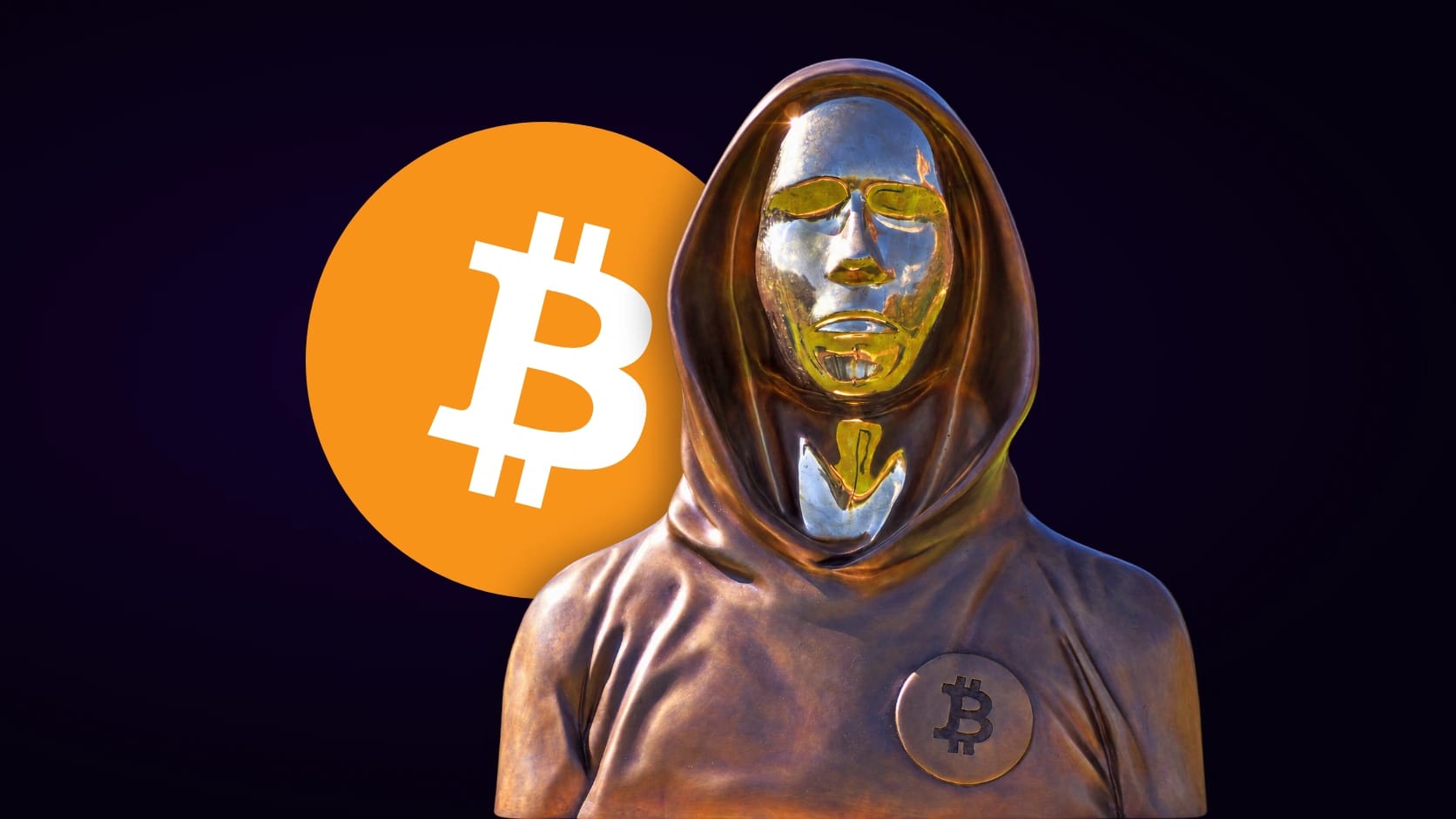
The absence of a known identity has prompted theories about who might have created Bitcoin. Yet the chosen name and the published messages do not establish a nationality, an age or an appearance. This uncertainty also explains why images dedicated to Satoshi often use symbolic representations.
The statue illustrating this article stands in Graphisoft Park in Budapest. Réka Gergely and Tamás Gilly created it in 2021 as a hooded figure with a polished bronze face. As the artists explain on the park's website, visitors can see their reflection in it, expressing the idea that anyone can be part of the project. The sculpture pays tribute to Bitcoin's creator without claiming to depict their actual appearance.
Satoshi's contribution to Bitcoin's history
Satoshi took an electronic cash proposal from a technical paper to a network that others could use and maintain. By publishing the code and working with early contributors, Nakamoto left a foundation that allowed development to continue after that involvement ended.
This work explains Bitcoin's origins, while its later trajectory includes decisions and contributions from many other participants. The history of Bitcoin follows that broader evolution. The creator's identity remains an open question, but the project Nakamoto launched has a history that can be traced through its documents, its software and the people who helped it grow.

- Bitcoin whitepaper announcement
- Bitcoin: A Peer-to-Peer Electronic Cash System
- Bitcoin v0.1 release announcement
- Bitcoin and me, by Hal Finney
- Satoshi Nakamoto: development update, December 12, 2010
- Bitcoin FAQ: network control
- Graphisoft Park: Satoshi Nakamoto sculpture
- Bitcoin Core: genesis block parameters
Got a blockchain project in mind?
From idea to product, strategy and technology must move forward together.