Who is Pavel Durov? Telegram founder and the origins of TON
Pavel Durov's biography: VKontakte, Telegram, the TON project Telegram abandoned in 2020 and the criminal investigation still open in France.
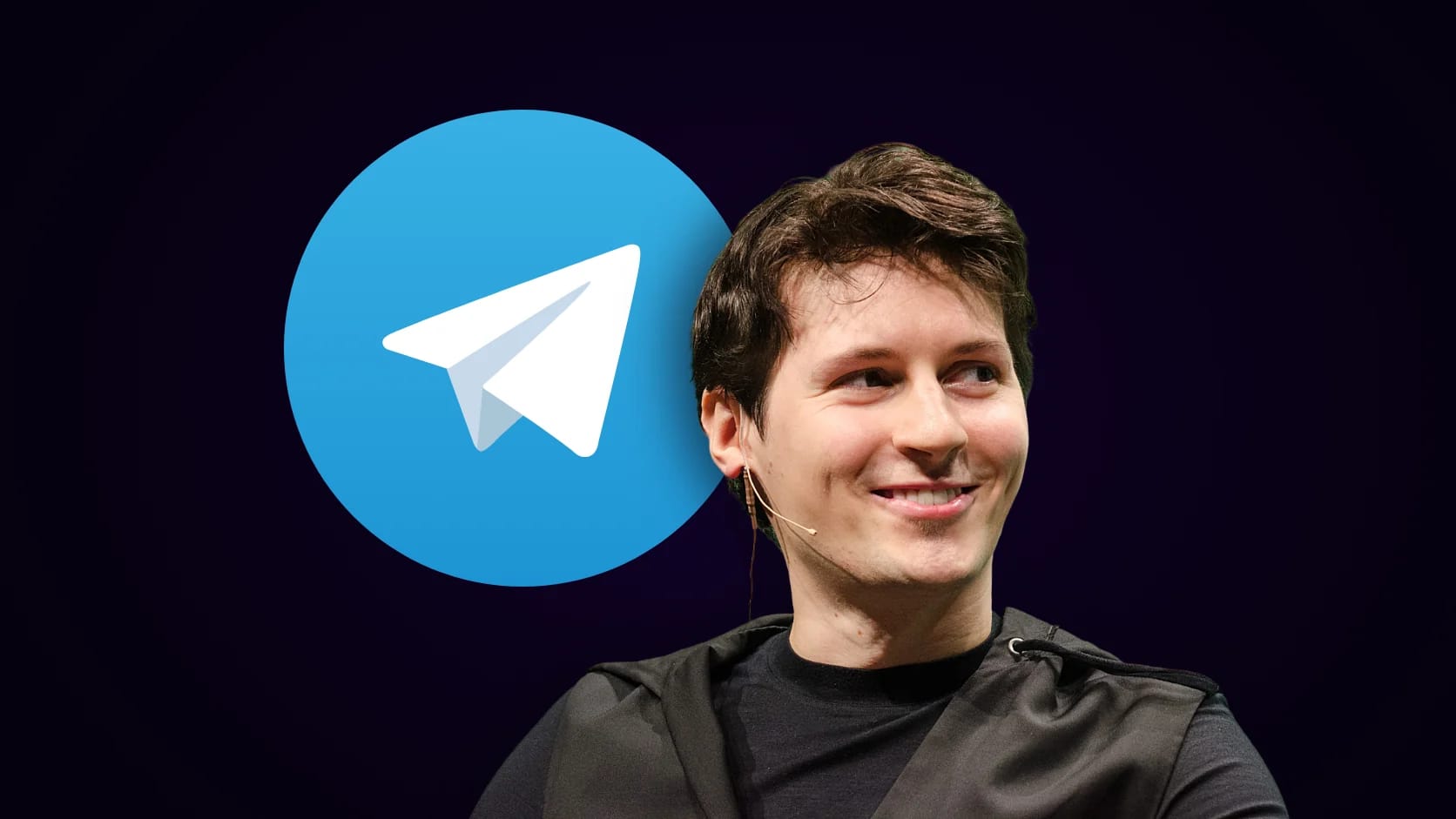
Pavel Durov is an entrepreneur born in Leningrad, now Saint Petersburg, who founded two of the most widely used Russian-language communication services with his brother Nikolai: the social network VKontakte, in 2006, and the messaging app Telegram, in 2013. Telegram then grew well beyond Russia to become one of the world's most widely used messaging apps.
His name belongs to the history of blockchain because of TON, a network that Telegram designed between 2017 and 2018 to integrate into the app. The US SEC blocked delivery of its token and Telegram abandoned the project in 2020. Other developers kept the network running and, years later, Telegram integrated it again. That sequence requires a careful distinction between the person, the company, the network and the foundation that now supports it.
Who is Pavel Durov?
Durov is the founder and CEO of Telegram, a company headquartered in Dubai. His brother Nikolai, a mathematician and programmer, has been the technical lead on his projects: he developed VKontakte and authored the TON technical papers, according to the network's documentation. When Telegram announced its agreement with TON in January 2025, the app had about 950 million monthly active users, according to the joint announcement.
Durov holds several nationalities, including Emirati and French citizenship. The latter matters for his current situation, because the criminal investigation concerning him is being conducted in France.
Early life and education
Durov was born in 1984. His father, Valery Durov, is a professor of philology, and the family spent much of Pavel and Nikolai's childhood in Turin, where their father worked. Back in Russia, Pavel studied English and translation at Saint Petersburg State University and graduated in 2006, the same year he launched VKontakte. CNN summarized this background after his arrest in France.
VKontakte and leaving Russia
VKontakte, known as VK, was modeled on Facebook and in late 2008 overtook Odnoklassniki as the most used social network in Russia. Durov ran it as CEO while Nikolai led development, with Vyacheslav Mirilashvili and Lev Leviev as early partners.
His departure was tied to political pressure. Durov refused to shut down pages linked to Alexei Navalny and to hand over data on organizers of the Euromaidan protests in Ukraine. In April 2014, VK's shareholders removed him from the company's leadership, and Durov told TechCrunch that he had left Russia and had no plans to return. He had sold his stake in the company at the end of 2013.
Telegram: how the company he founded works
Pavel and Nikolai launched Telegram in 2013, before his final exit from VK. The company moved through Berlin before settling its headquarters in Dubai, where Durov relocated in 2017. The app combines private conversations, groups and broadcast channels that can reach millions of people.
One technical feature shapes much of the debate about Telegram: end-to-end encryption is not enabled by default but applies to "secret chats", which only work between the two devices in the conversation, according to Telegram's FAQ. Regular chats, groups and channels are synced through the company's servers. That is why requests from authorities about content and users are addressed to Telegram as the operator of the service.
TON: the blockchain network Telegram designed
In late 2017, Telegram began presenting the Telegram Open Network (TON) to investors: a blockchain network designed to work inside the app, with its own token called Gram. The design split the network into multiple chains to spread the transaction load across groups of validators. It was a full infrastructure proposal rather than a payment service bolted onto the app.
According to the SEC, Telegram sold about 2.9 billion Grams to 171 initial purchasers, who were to receive the tokens once the network launched. The regulator sued the company in October 2019, arguing that the sale was an unregistered securities offering, and in March 2020 a federal court in New York barred delivery of the Grams.
On 12 May 2020, Durov announced on his blog that Telegram's active involvement with TON was over. He wrote that a US court had stopped TON from happening and criticized the fact that the decision extended to buyers in other countries. In June, Telegram agreed to return more than $1.2 billion to purchasers and pay an $18.5 million civil penalty, without admitting or denying the allegations.
From Telegram Open Network to The Open Network
TON's code was public. After Telegram withdrew, developers outside the company continued the network, renamed it The Open Network and created the TON Foundation, a non-profit based in Zug, Switzerland. The network's asset was renamed Toncoin. The TON technology page explains its current architecture.
The relationship with Telegram grew closer again. In January 2025, Telegram and the foundation announced that TON would be the exclusive blockchain for Telegram's Mini Apps and that TON Connect would be the only protocol for connecting them to wallets. Apps using other networks had until 21 February 2025 to migrate. For a development team, that decision sets the technical environment, as shown when building Mini Apps on TON.
Person, company, network and token
Durov founded Telegram, drove TON's original design and today runs an app that integrates the network. That does not make TON a Telegram subsidiary: other teams maintain it, an independent foundation promotes it and its operation depends on the validators that run it. Toncoin does not confer rights over Telegram or its revenue either.
Dependence exists in a different sense. The 2025 exclusivity was decided by Telegram as owner of the Mini Apps platform, and a similar decision could change the conditions for anyone building on TON inside the app. Teams assessing that option should distinguish what the network guarantees from what depends on Telegram's policies.
The criminal investigation in France
On 24 August 2024, Durov was arrested at Paris-Le Bourget airport as part of an investigation into crimes committed through Telegram. Four days later he was placed under formal investigation (mis en examen) on charges including complicity in the distribution of child sexual abuse material and in drug trafficking, as well as refusing to provide information requested by the authorities, according to Le Monde. He was released under judicial supervision, with bail of five million euros and a ban on leaving France.
The restrictions were gradually eased. In March 2025 he was allowed to leave the country temporarily, and in November 2025 the court fully lifted the travel ban and the requirement to report to the police. The investigation remains open: as of 31 October 2026, no trial date has been set and Durov denies the allegations.
Pavel Durov's contribution
Durov's contribution to blockchain is better understood as a product bet than as a technical contribution, which came mainly from his brother and other developers. His idea was to integrate a public network into an app with hundreds of millions of users, so that sending value would become as routine as sending a message. It took two attempts and a change of stewardship for that integration to happen.
The Gram case is also one of the clearest precedents on token pre-sales: the fact that the project came from a messaging company did not exempt it from analysis as a security. And the current integration shows the other side of distributing a network through such a large app: reach increases, but so does the influence of whoever controls that app over the projects that depend on it.

- SEC: Telegram to return $1.2 billion to investors (26 Jun 2020)
- Pavel Durov: What was TON and why it is over (12 May 2020)
- TON Foundation and Telegram: TON becomes the exclusive blockchain for Mini Apps (21 Jan 2025)
- TON documentation and whitepapers
- Telegram FAQ: secret chats
- TechCrunch: Durov out for good from VK.com (22 Apr 2014)
- Le Monde: Pavel Durov placed under formal investigation (28 Aug 2024)
- France 24: France lifts travel ban on Telegram founder Durov (13 Nov 2025)
Got a blockchain project in mind?
From idea to product, strategy and technology must move forward together.