Who is Jeremy Allaire? Co-founder of Circle, the issuer of USDC
Jeremy Allaire's biography: ColdFusion, Brightcove and how he turned Circle into the regulated issuer of USDC, from the BitLicense to MiCA and the IPO.
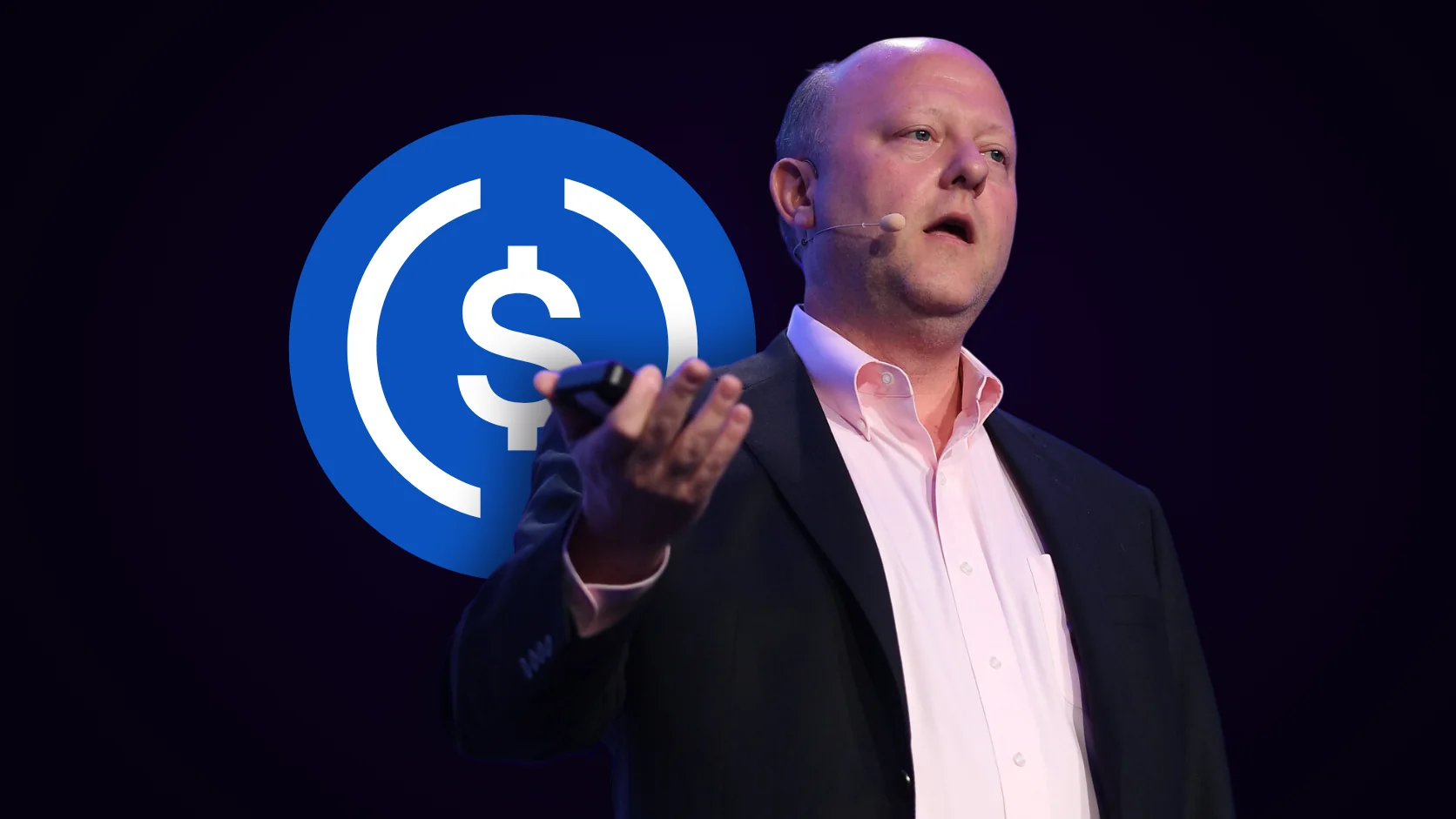
Jeremy Allaire is an American technology entrepreneur and the co-founder, chairman and CEO of Circle, the company that issues USDC. USDC is a stablecoin, a token whose value stays tied to the dollar because the issuer commits to redeem each unit for one dollar. Before Circle, Allaire co-founded two other software companies that went public: Allaire Corporation, which developed the ColdFusion web application platform, and Brightcove, which specialized in online video.
That track record explains Circle's approach. Allaire has framed the company as infrastructure that other businesses build on, and has sought licenses and regulatory oversight from the start. Circle obtained New York's first BitLicense in 2015, went public in June 2025 and in 2026 received final approval to operate a national trust bank in the United States.
Education and first companies
In the letter accompanying Circle's IPO prospectus, Allaire writes that he grew up with an Apple II at home and was already using pre-internet online services in the early 1980s. He studied political science and philosophy at Macalester College, according to the same prospectus; in the letter he also lists economics among his studies. In 1990, while still at university, he began using the internet and became convinced that open networks would transform the economy.
In 1995 he founded Allaire Corporation with his brother JJ Allaire. The company developed ColdFusion, one of the first platforms for building web applications connected to databases, and Jeremy served as its chief technology officer. In January 2001, Macromedia agreed to acquire Allaire in a deal valued at about $360 million, and Allaire became Macromedia's chief technology officer.
He then worked as a technologist and entrepreneur in residence at the venture capital firm General Catalyst. In 2004 he co-founded Brightcove, a platform for publishing and monetizing video online, which he led as CEO and which listed on Nasdaq in February 2012.
From the 2008 crisis to Circle
Allaire explains in his letter that the 2008 financial crisis led him to study the history of banking, money and central banks. He concluded that the financial system needed an architecture built on open networks and open software. In 2012 he came across Bitcoin. He was not convinced it was the answer in itself, but he saw in it a combination of technical innovation and the idea of an open, internet-based financial system.
In early 2013, together with Sean Neville, he concluded that blockchain would make it possible to issue tokens representing other assets and to build money protocols on top of them. They described the goal as an "HTTP for money": an open, programmable protocol for dollars and other currencies. Circle was founded in August 2013, with Allaire as chairman and CEO from day one. Neville shared the leadership as co-CEO until late 2019 and remains on the board of directors.
Early products and the turn to USDC
Circle started as a consumer payments company. On 22 September 2015, the New York State Department of Financial Services granted it the first BitLicense, the state's license for virtual currency businesses. In 2018 it bought the Poloniex exchange, and during those years it built payment and investment apps.
None of those lines became the core of the business. In 2019, Circle shut down its payments app, divested Poloniex and announced it would focus on USDC, which it had launched in September 2018. To promote the standard, it set up the Centre consortium with Coinbase. In August 2023, Circle bought Coinbase's half of Centre and dissolved it in December of that year, bringing USDC's management entirely within the group.
How USDC works
Businesses that use Circle Mint, Circle's institutional service, deliver dollars and receive newly issued USDC on a blockchain network; on redemption, Circle takes those tokens out of circulation and returns the dollars. The technical side runs on smart contracts deployed on each network. In the 2025 prospectus, USDC was natively available on 20 networks, starting with Ethereum.
The reserves backing the tokens are not on-chain. As of 31 March 2025, around 90% was held in the Circle Reserve Fund, a government money market fund managed by BlackRock and held in custody by BNY, with the rest in cash at banks. Circle publishes the composition of the reserves and commissions monthly assurance reports from an accounting firm.
That design has limits worth knowing. A USDC holder has a redemption claim against the issuer, not direct ownership of the reserves. The USDC terms also allow Circle to block addresses it associates with illicit activity and to freeze balances when an authority's order requires it. The dependence on banks became visible in March 2023: Circle held more than $3 billion at Silicon Valley Bank when the bank failed, and USDC traded below one dollar on secondary markets until those funds became available.
Regulation in Europe and the United States
In June 2022 Circle launched EURC, a euro-backed stablecoin. On 1 July 2024, its French subsidiary obtained an electronic money institution license from the French supervisory authority (ACPR) and began issuing USDC and EURC under MiCA, the European regulation on crypto-assets. Under MiCA, that subsidiary must redeem at par any USDC or EURC presented to it.
In the United States, the GENIUS Act, signed on 18 July 2025, created the first federal framework for payment stablecoins. Allaire attended the signing at the White House and, according to Decrypt, said the law enshrined Circle's way of doing business. The following year, the Office of the Comptroller of the Currency (OCC) gave final approval to Circle National Trust, a national trust bank focused on digital asset custody that does not issue stablecoins or take insured deposits.
Person, company and protocol
Circle is incorporated as Circle Internet Group and has traded on the New York Stock Exchange since 5 June 2025, after an IPO priced at $31 per share. USDC and EURC are issued by regulated subsidiaries of the group, not by a foundation or a decentralized autonomous organization. Allaire influences the company as CEO and chairman and through Class B shares carrying five votes each. The prospectus caps those shares at 30% of voting power and provides for their conversion into ordinary shares if Allaire leaves both the chair and the CEO role, or five years after the IPO.
In 2025 Circle announced Arc, its own blockchain network for payments and financial markets, where USDC is used to pay fees. The public network went live on 16 September 2026 with an authorized group of validators, including BlackRock and Visa. Circle minted 10 billion ARC tokens at launch and, as of that date, had not committed to a public sale.
Current situation
As of 31 October 2026, Allaire remains Circle's co-founder, chairman and CEO. According to the second-quarter 2026 results, published on 5 August, there were 73.3 billion USDC in circulation at the end of June. The sources consulted do not record legal proceedings against Allaire personally.
Jeremy Allaire's contribution
Allaire's contribution lies in turning the dollar into a token that any application can integrate, within regulatory frameworks and with reserves that can be verified. Many payment, decentralized finance and asset tokenization applications use USDC as their settlement unit because it offers that combination of programmability and redemption.
The model has a cost that the design itself makes explicit: USDC depends on a central issuer, its banks and the rules of each jurisdiction, and Circle can block addresses. Allaire has defended that structure as the route for banks, asset managers and regulators to adopt public networks. The progress of Arc and the trust bank will show whether Circle can extend that approach from issuing money to the full infrastructure on which tokenized assets settle.
- Circle Internet Group: IPO prospectus, Form 424B4 (June 2025)
- Macromedia and Allaire merger filing, Form 425 (Jan 2001)
- NYDFS: first BitLicense approved for Circle (22 Sep 2015)
- Circle: first global stablecoin issuer to comply with MiCA (1 Jul 2024)
- Circle: USDC terms
- Decrypt: Trump signs GENIUS Act into law (18 Jul 2025)
- Banking Dive: Circle gets OCC's full trust bank charter (10 Jul 2026)
- The Block: Circle launches Arc mainnet (16 Sep 2026)
- Circle: second quarter 2026 results (5 Aug 2026)
Got a blockchain project in mind?
From idea to product, strategy and technology must move forward together.