Who Is Charles Hoskinson, Founder of Cardano and IOG
Who Charles Hoskinson is, his brief Ethereum role and how he founded IOG to build Cardano around academic research, proof of stake and on-chain governance.
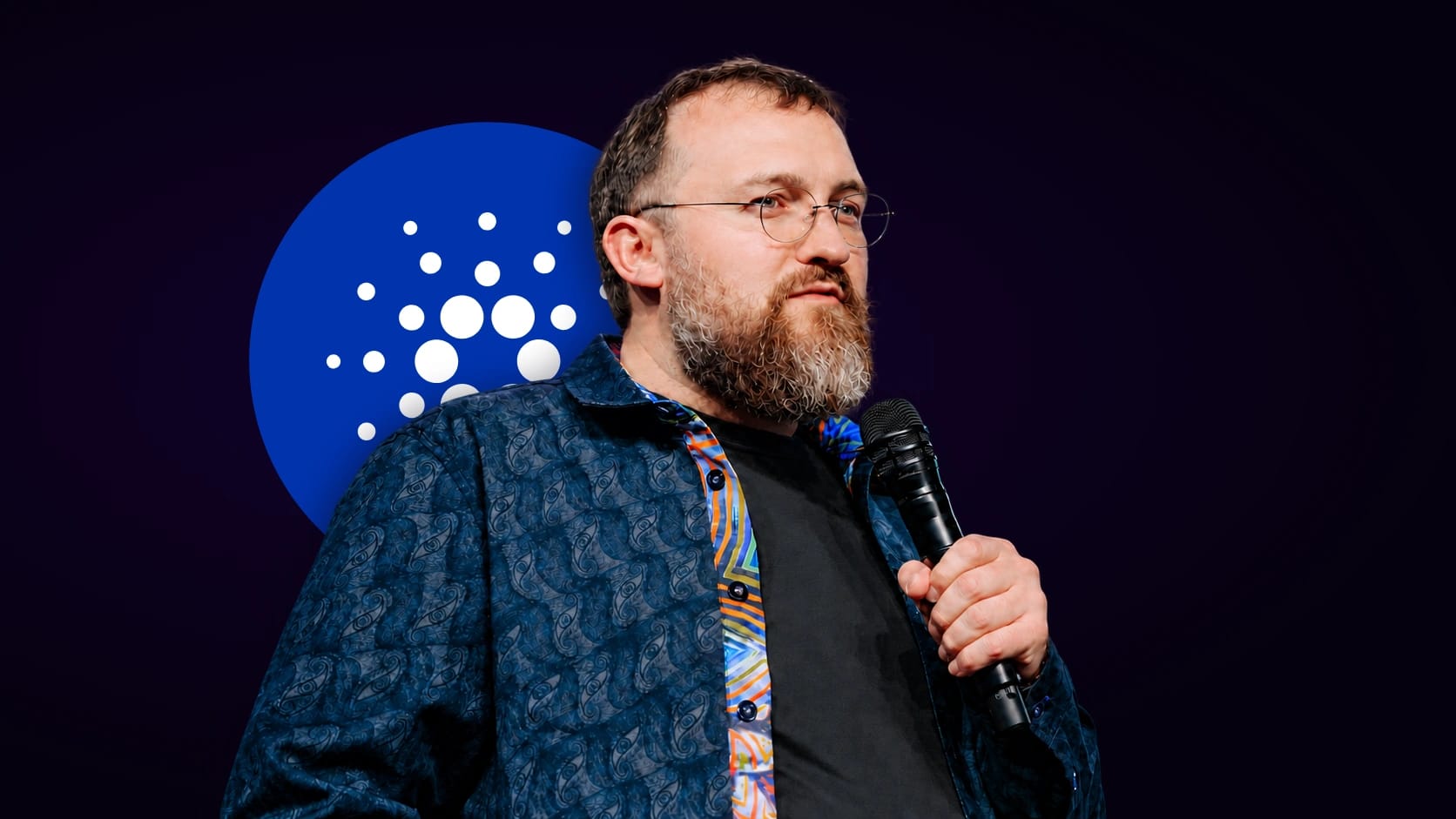
Charles Hoskinson is a cofounder of Ethereum and a driving force behind Cardano, a project that placed academic research and formal design at the center of development. His involvement in both offers a view of two approaches to building blockchain infrastructure and organizing the teams behind it.
Bringing research and software closer together is a demanding ambition. Its value becomes apparent when those ideas reach tools others can use and maintain. Cardano brings together researchers, engineers, pool operators and governance bodies; examining their responsibilities helps assess Hoskinson's leadership without attributing all their work to him.
Who is Charles Hoskinson?
Charles Hoskinson co-founded Input Output and helped initiate Cardano. He previously participated in founding Ethereum. His career connects the leadership of an engineering company with an institutional question: how an open protocol can be funded, maintained and governed over time.
Hoskinson's public career in this field began in 2013, when he left a consulting role and launched the Bitcoin Education Project, a free course about digital assets. That work connected him with early Ethereum contributors and led to a role shaping the project's initial organization.
What was Hoskinson's role in Ethereum?
Ethereum's official history lists Hoskinson among its eight co-founders. He joined Vitalik Buterin and the other early collaborators in late 2013, taking on organizational work. He helped present the project, explore a legal structure and prepare the founders' gathering held in Miami in early 2014.
His relationship with Ethereum ended in 2014, before mainnet launched. The central disagreement concerned structure. Hoskinson favored a commercial company funded by professional capital. Buterin chose a nonprofit foundation. Later accounts differ on personal details but consistently identify that divide between two institutional models.
The episode matters for design more than conflict. A protocol needs code, but it also needs answers about who funds development, who represents the project and who can alter its rules. Hoskinson carried those questions into his next company.
How did Input Output and Cardano begin?
Hoskinson and Jeremy Wood founded Input Output Hong Kong in 2015. Now known as Input Output Group or IOG, the organization assembled researchers and engineers to develop open systems through a process closer to academic computer science. Cardano became its main project and launched its mainnet in 2017.
Initial development was divided among three entities. IOG researched and built the protocol. Cardano Foundation provided institutional stewardship and promoted standards. EMURGO focused on commercial adoption. The arrangement kept every function from sitting inside one organization, although the three founding entities retained technical privileges during the transition period.
Why was Cardano built through academic research?
IOG chose to publish research, submit results for academic review and translate accepted work into specifications. Cardano's node was developed primarily in Haskell, a functional language with strict types and strong support for formal reasoning. The goal was to reduce ambiguity before deploying changes that would protect real value.
Ouroboros, Cardano's family of consensus protocols, came from this process. The first academic paper was authored by a research team led by Aggelos Kiayias, not by Hoskinson. That distinction separates business leadership from scientific authorship. The founder's role was to fund, assemble and sustain an organization capable of turning research into maintained software.
Ouroboros uses proof of stake to select block producers according to delegated ada. Its security analysis states conditions under which independent participants can agree on a history. A mathematical proof cannot guarantee that every application built above the protocol is safe, but it constrains the consensus properties an implementation must preserve.
How did Cardano evolve in stages?
Cardano divided its roadmap into development phases instead of introducing every capability at once. Phase names describe broad objectives, while ledger eras identify concrete sets of rules. Confusing these categories causes many historical summaries to assign dates or features to the wrong milestone.
- Byron. Launched the federated network, ada and the first wallets in 2017.
- Shelley. Enabled delegation and began the transition in 2020 from federated block production toward independent stake pool operators.
- Goguen. Added native assets and smart contracts through several upgrades.
- Basho and Voltaire. Group ongoing work on scaling, interoperability and decentralized governance.
Research, specification and implementation add stages to development. Cardano’s approach aims to make assumptions explicit and reduce design errors, but the process alone does not prove that a network or application is safer. Software quality, operations and incident response still require their own evidence.
Does Charles Hoskinson own Cardano?
No. Hoskinson leads IOG and has considerable influence, but Cardano is a public network with operators, ada holders and independent organizations. The founding entities relinquished their genesis keys after the Chang and Plomin upgrades activated the Voltaire governance model.
Cardano governance distributes powers among delegated representatives (DReps), stake pool operators and a constitutional committee. DRep and pool influence is stake-weighted; it is not equivalent to one person, one vote. Required thresholds and actors vary by action. IOG can develop code and advocate proposals, while adoption depends on governance and the people operating the network.
What is Charles Hoskinson doing today?
The Input Output leadership page, checked for this review, lists Hoskinson as founder and CEO. That company role must be distinguished from responsibilities within Cardano. The organization maintains a portfolio of projects and teams; not every product it builds is the Cardano protocol, and not every change to Cardano originates with its founder.
His legacy remains unsettled. Cardano still has to prove that a rigorous process produces useful tools, sustainable applications and governance that works under genuine disagreement. Hoskinson's lasting contribution may not be one protocol feature. It may be treating a public network as an institution that requires research, funding and succession.
If you are defining those foundations for a product, our blockchain development team can take the architecture from specification to production.



- Input Output, leadership team
- Input Output, company history
- Ethereum, history of the network
- Fortune, interview on Ethereum governance (2019)
- Forbes, profile of Charles Hoskinson and Input Output (2018)
- Charles Hoskinson, Why Cardano
- Cardano Docs, development phases and eras
- Cardano Docs, Ouroboros overview
- Cardano Docs, governance overview
- Cardano Foundation, Shelley launch (2020)
Got a blockchain project in mind?
From idea to product, strategy and technology must move forward together.