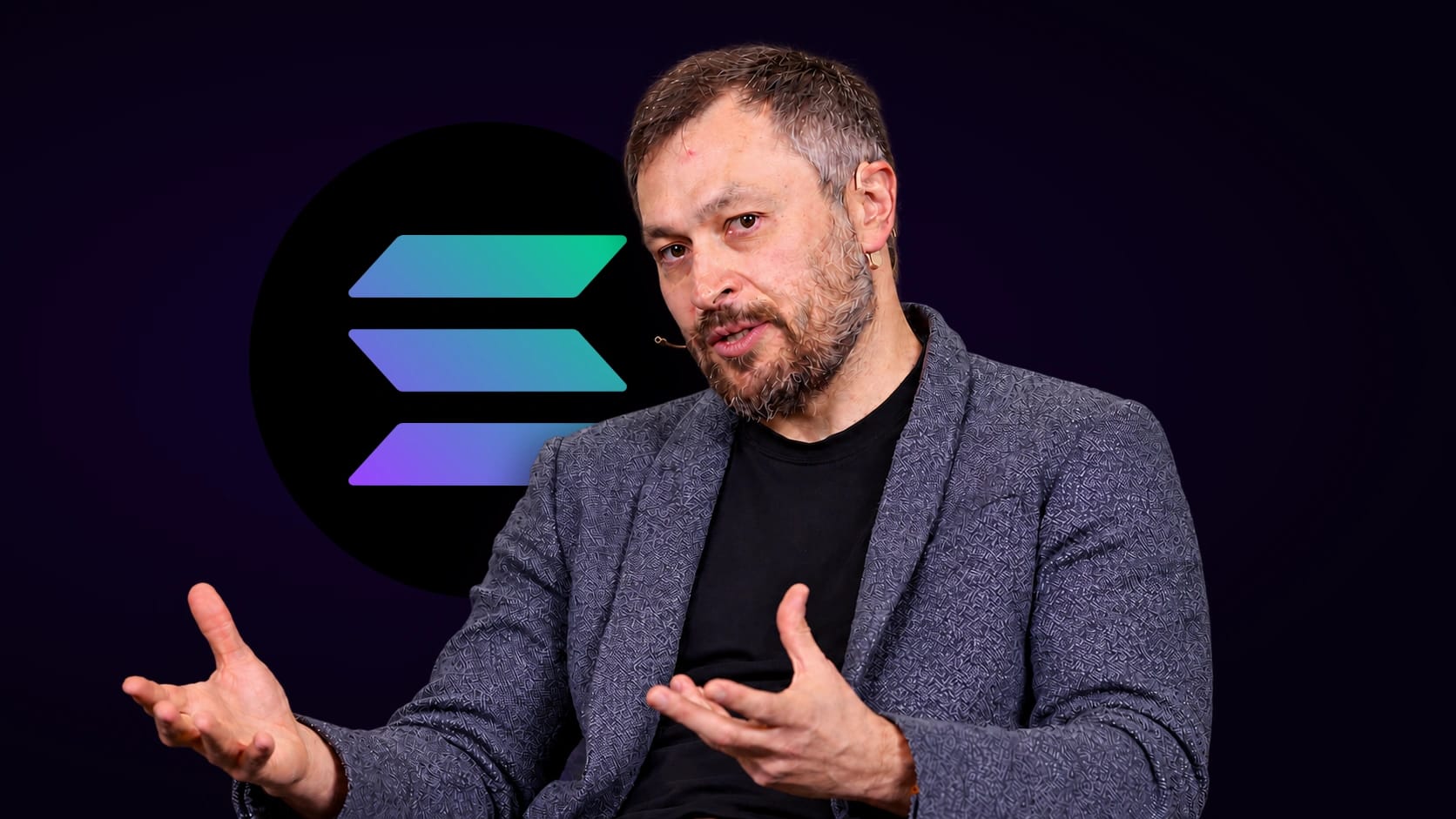
Who is Emin Gün Sirer? Avalanche founder
Emin Gün Sirer’s path from Cornell research and Karma to Ava Labs and Avalanche: consensus, co-founders and the distinction between company and network.

Emin Gün Sirer is one of Avalanche's founders and a researcher in distributed systems, the field studying how independent machines collaborate despite delays, failures or dishonest participants. Long before Avalanche had a public network, he was working on those questions of coordination.
Taking a line of research into an operating network requires examining how its results apply in software and under real operating conditions. Sirer's career offers a way to follow that work and the collaborators who helped turn it into Avalanche.
Who is Emin Gün Sirer?
Emin Gün Sirer is a distributed systems researcher, co-founder of Ava Labs and a leading contributor to Avalanche’s origins. His Cornell academic page documents work on operating systems, networking and distributed services. The Ava Labs leadership page identifies him as the company’s CEO.
Ava Labs is a development company; Avalanche is a network and a family of protocols. That distinction prevents a company role from being mistaken for automatic authority over every application or blockchain using its technology. Sirer combines research with organizational leadership, but the system is not an individual achievement.
Karma: digital currency before Bitcoin
In 2003, Sirer worked with Vivek Vishnumurthy and Sangeeth Chandrakumar on Karma, an economic framework for peer-to-peer resource sharing. It addressed a familiar problem: participants consuming resources without contributing a proportionate share.
Karma used a virtual currency to connect contribution with consumption. It is a relevant precedent for his interest in incentives and coordination, but should not be described as Bitcoin before Bitcoin. Its purpose, design and context were different.
The continuity lies in the research question: how a shared system can work when participants have their own interests. That question reappears in blockchains when distributing block production, validation and computing resources.
From research to Avalanche
The protocol family behind Avalanche developed from a proposal initially signed as Team Rocket. The reference research paper credits Team Rocket, Maofan Yin, Kevin Sekniqi, Robbert van Renesse and Emin Gün Sirer. Attribution matters: calling it Sirer’s sole invention would be inaccurate.
Sirer co-founded Ava Labs with Kevin Sekniqi and Maofan Yin to turn that technical direction into a platform. Avalanche mainnet launched in September 2020. Moving from a paper to an operating network requires implementation, testing, tools and validator coordination that a founder’s name alone does not explain.
The architectural aim was to support different blockchains with their own execution requirements. Applications need not all share identical rules or compete for the same resources, although connecting them introduces further responsibilities.
What does Avalanche consensus contribute?
The research describes agreement through repeated queries to subsets of participants. Under the protocol’s assumptions and parameters, those queries reinforce a preference until a decision is reached with probabilistic guarantees. It does not mean asking a few machines once and treating the answer as valid.
Security depends on explicit conditions, including adversarial participation and system configuration. Consensus should also be distinguished from execution: agreeing on a block and executing a contract correctly are related but separate problems.
A laboratory figure cannot replace production conditions when comparing networks. Finality, latency under load, recovery and operating cost matter. The research provides a model in which those tradeoffs can be examined.
C-Chain, P-Chain and specialized networks
The Avalanche documentation distinguishes three chains in its Primary Network. C-Chain executes EVM-compatible contracts; P-Chain handles validator and network operations; X-Chain focuses on native assets. EVM compatibility does not make C-Chain an Ethereum layer 2.
The ecosystem also supports Avalanche L1s with their own configurations. Each requires checking who validates it, which permissions remain and how it connects to other networks. Sharing a technology family does not automatically mean sharing the same validator set or guarantees.
This design can be contrasted with Gavin Wood’s work on Polkadot. Both paths consider specialized networks, but organize security and coordination differently. A useful comparison examines mechanisms rather than the multichain label.
What does the founder control?
Sirer leads a company able to propose and develop technology. The network also requires operators running software, teams maintaining tools and applications adopting published capabilities. Ava Labs leadership should not be confused with ownership of all those components.
Upgrades must be distinguished by status: proposal, implementation, testing or activation. A founder’s statement can explain a direction, but documentation, releases and operational behavior establish what a network actually does.
The same separation applies to AVAX. It has functions within the system and is not equity in Ava Labs. Its price does not independently measure consensus quality or replace an application risk assessment.
Emin Gün Sirer’s contribution
Sirer connects distributed systems research with the construction of usable infrastructure. His career shows that designing a blockchain goes beyond choosing a language or publishing a token: it requires stating assumptions, implementing rules and maintaining operation.
Avalanche should be assessed by how it realizes those choices, together with the work of its co-founders and collaborators. For product teams, the lesson is concrete: specialized architecture can provide flexibility, but requires documenting where security comes from and who maintains it.

Got a blockchain project in mind?
From idea to product, strategy and technology must move forward together.