Blockchain: Transparency in Prediction Markets
How prediction market prices form, who resolves outcomes and why a price is not an objective probability.
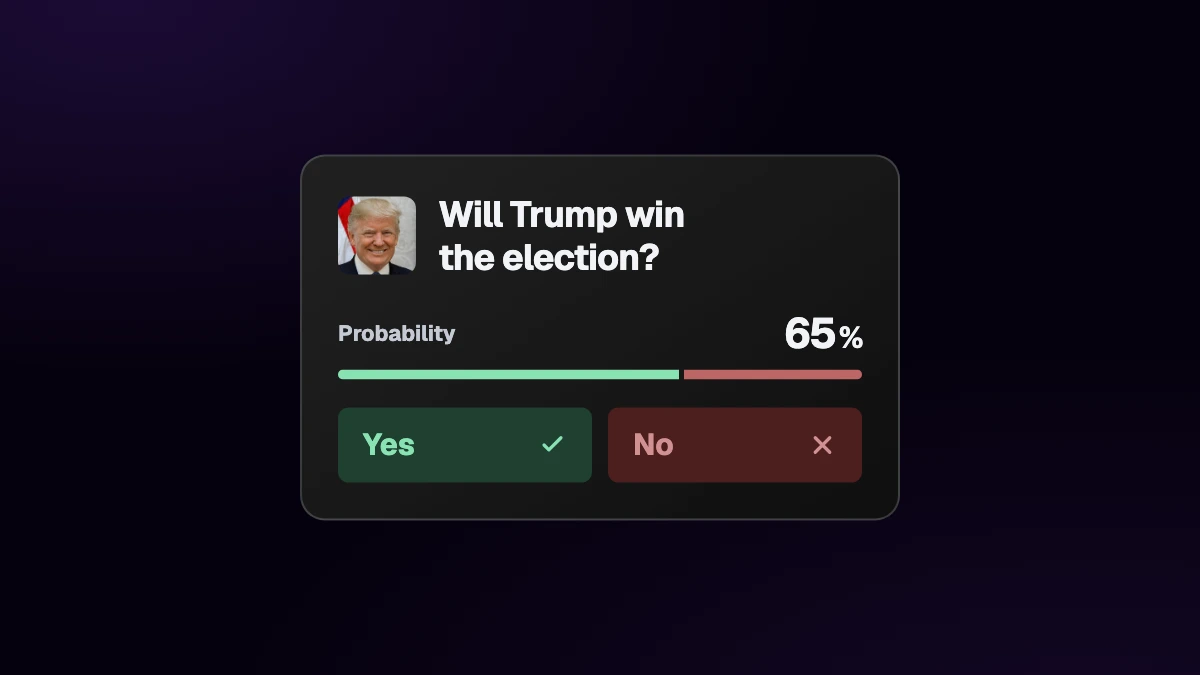
Prediction markets let participants take positions on the outcome of an event, such as an election or a sporting competition. Each market defines a question, possible outcomes and the conditions determining its payout. Platforms such as Polymarket use blockchain to record parts of those transactions and make them verifiable.
A market’s operation depends on both trading and the process used to confirm the result. Interpreting its prices therefore requires understanding what is traded, which sources are consulted and how disputes are resolved. The price expresses participants’ expectations under those conditions; it is not an objective probability.
What a contract price expresses
A prediction market trades positions whose payout depends on a defined outcome. Price can be interpreted as an expectations signal under certain conditions, but incorporates liquidity, fees, incentives and participant restrictions. It is not an objective probability or a guaranteed forecast.
What can be checked on-chain
A public register may expose positions, transfers and settlements. Transparency depends on which components run on the network and which remain in an interface, order engine or external provider. Prediction markets do not all use blockchain or share an architecture.
Who determines the outcome
A contract needs resolution rules: the exact question, deadline, source and handling of ambiguity. Polymarket describes using UMA’s optimistic oracle to propose and dispute outcomes. This illustrates a key dependency: transaction consensus does not independently determine off-chain events.
Check who can propose an outcome, challenge it or modify parameters. A poorly defined question may cause disputes even when the contract executes its code correctly.
Risks the product retains
- Insufficient liquidity to enter or exit at the displayed price.
- Ambiguous data, disputes and resolution delays.
- Contract, administrative key or integration failures.
- Geographic restrictions and changing access conditions.
These risks prevent describing the architecture as intermediary-free or fraud-free. Data providers, interfaces and dispute mechanisms still perform relevant functions.
A binary market from question to payout
Consider a hypothetical market with two outcomes: yes and no. Each winning position pays one unit on resolution, while a losing position pays nothing. Buying ten yes positions at 0.60 units each costs six units before fees. If yes wins, the holder receives ten; if it loses, that payout is zero. These figures illustrate the mechanism rather than a live quote or an estimate about a real event.
A displayed price does not guarantee that any quantity can be bought at that level. An order needs a counterparty and may fill partially or at different prices according to its conditions. The interface should therefore distinguish indicative price, executed quantity and the position actually acquired.
After the event, resolution under the agreed rules still remains. A news report announcing a winner may not match the market’s defined trigger, which could require an official declaration or a specified source. Until resolution is complete, the user’s expectation and entitlement to payment are different states.
A clearly specified platform makes the original question, applicable rules, proposed resolution and disputes accessible. This history explains why an outcome paid and helps assess whether the terms were understandable before trading.
Using the information
A business can observe markets as an additional expectations signal and compare it with other evidence. Review volume, depth, rules and concentration before interpreting movements. A price change does not establish new information or validate a business decision based on it.
Before building a product, document classification and requirements in intended jurisdictions. An authorisation granted to a specific entity does not extend to all markets or networks using similar technology.
Got a blockchain project in mind?
From idea to product, strategy and technology must move forward together.