Hiring guide
How to choose a blockchain development company in 2026
How to choose a blockchain development company in 2026: engagement type, permissions, handover, operations and what a comparable proposal includes.
Anyone commissioning blockchain development has a specific product in mind, whether an issuance platform for tokenized assets, a payment system or a registry shared between companies, and faces providers who use the same words for different engagements. Writing a contract is only one part of the work. The interface, permissions, testing, integration with the company's systems and operations after launch make up the rest, and they are what separates two quotes with the same title.
The choice therefore depends on which type of engagement yours is and who will answer for each part once the system is in production. Metlabs publishes this guide and provides blockchain development services, so it has a commercial interest in the engagement. The guide does not rank companies: it gathers the criteria for comparing proposals, explains what changes with each type of engagement and presents how we work against those same criteria.
What to compare before hiring blockchain developers
Start with the process you want to launch and the people who will use it. An investment application needs onboarding, documentation and transactions; a network needs decisions about validators, upgrades and maintenance. Comparing proposals before resolving that difference can leave out responsibilities that will need to be commissioned later.
- Scope: which components the proposal includes, which systems it must integrate and what will continue to run outside the network.
- Permissions: who controls keys, can upgrade contracts or pause an operation, and how those powers are documented.
- Handover: access to code, reproducible tests, architecture documentation and deployment and transfer procedures.
- Operations: responsibility for monitoring, incidents, upgrades and infrastructure costs after launch.
Application, own network or protocol: three engagements with different responsibilities
The most frequent engagement is an application on a network that already exists: contracts, backend, interface and integrations with the company's systems. Others operate the network, but the product still depends on external services, such as network access to read and send transactions, event indexing or asset custody. The proposal should name each one, say who contracts it and what happens if it fails.
An own network is a different engagement. Frameworks such as Cosmos SDK, Polkadot SDK, OP Stack, Arbitrum's technology for dedicated chains or Hyperledger Fabric make it possible to build one, and each brings decisions that do not exist when deploying contracts on a public network: who validates, how upgrades are approved, who operates the nodes and who pays for that infrastructure over the product's life. Before accepting that layer, request a rationale for it and a plan for validators, permissions, upgrades and operations with named owners.
Protocol and infrastructure work (network clients, RPC endpoints, testnets, rollups or observability) calls for a different engineering profile and usually relies on open-source software maintained by third parties. In that case, define which part is being commissioned, which open projects it depends on and who ensures their maintenance. If the engagement also includes an end-user application, the proposal should state who builds it and who maintains it.
The network also changes the proposal. Our guides to choosing a development company on Ethereum, Solana, Polygon and BNB Chain explain what changed on each in 2026 and what a quote for that network should set out in writing.
 Metlabs: from scope to a product in production
Metlabs is a blockchain development studio with offices in A Coruña and Madrid, Spain, that builds the complete product, from smart contracts to backend, interface and integrations, for companies and financial institutions launching their own platform. Our in-house technical team works on the application and its business integrations; the proposal identifies the components, people and responsibilities required for the chosen network.
For tokenized issuances in Spain, we have published our collaboration agreements with Onyze for custody integration and Ursus-3 Capital for coordination with securities registration. These agreements describe how our software work connects to the other participants in an issuance. The responsibilities and providers needed for your project are defined in its own scope.
Product decisions and integration scope
At Metlabs, an in-house team works from product definition through development and deployment. The scope can combine smart contracts, wallets, payments, digital identity and the integrations users need to complete an operation. Architecture starts with those requirements and the permissions the business must retain.
The project follows discovery, architecture, development and validation. First, we decide which components belong on-chain; then contracts, backend and interface are built iteratively, with tests and peer review. The scope of an external audit and the handling of its findings should be agreed before deployment.
For a payment released when a delivery is accepted, define who confirms the milestone, who authorizes the transfer and what happens in a dispute. That decision spans the contract, the application and business operations. Our blockchain development services address this connection between product and engineering.
To assess our proposal, request a prioritized scope, a permissions model and acceptance criteria for each delivery. Also review who will administer the system and what maintenance includes. This lets you compare the complete project with other offers rather than assessing only the list of technologies.
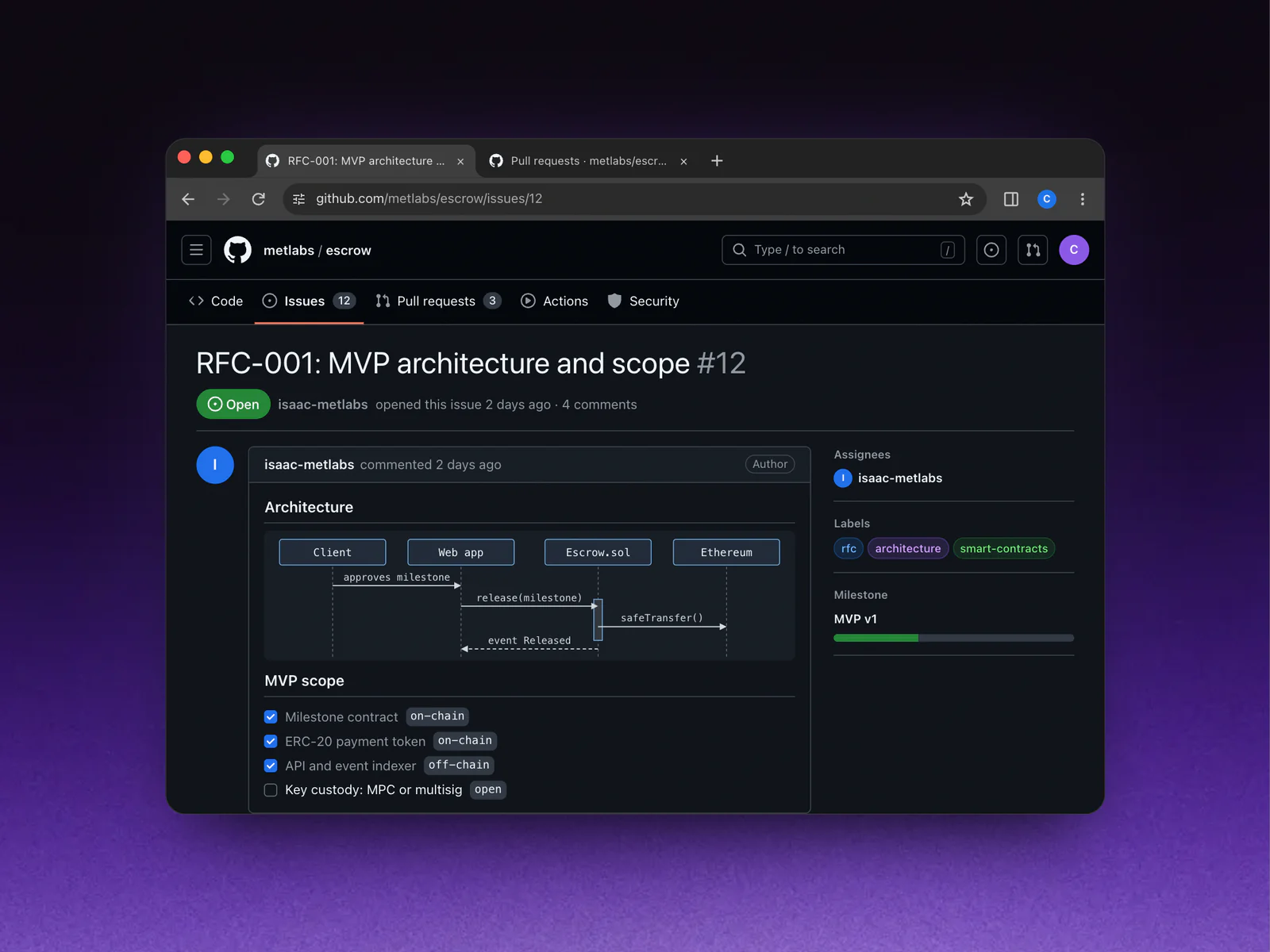
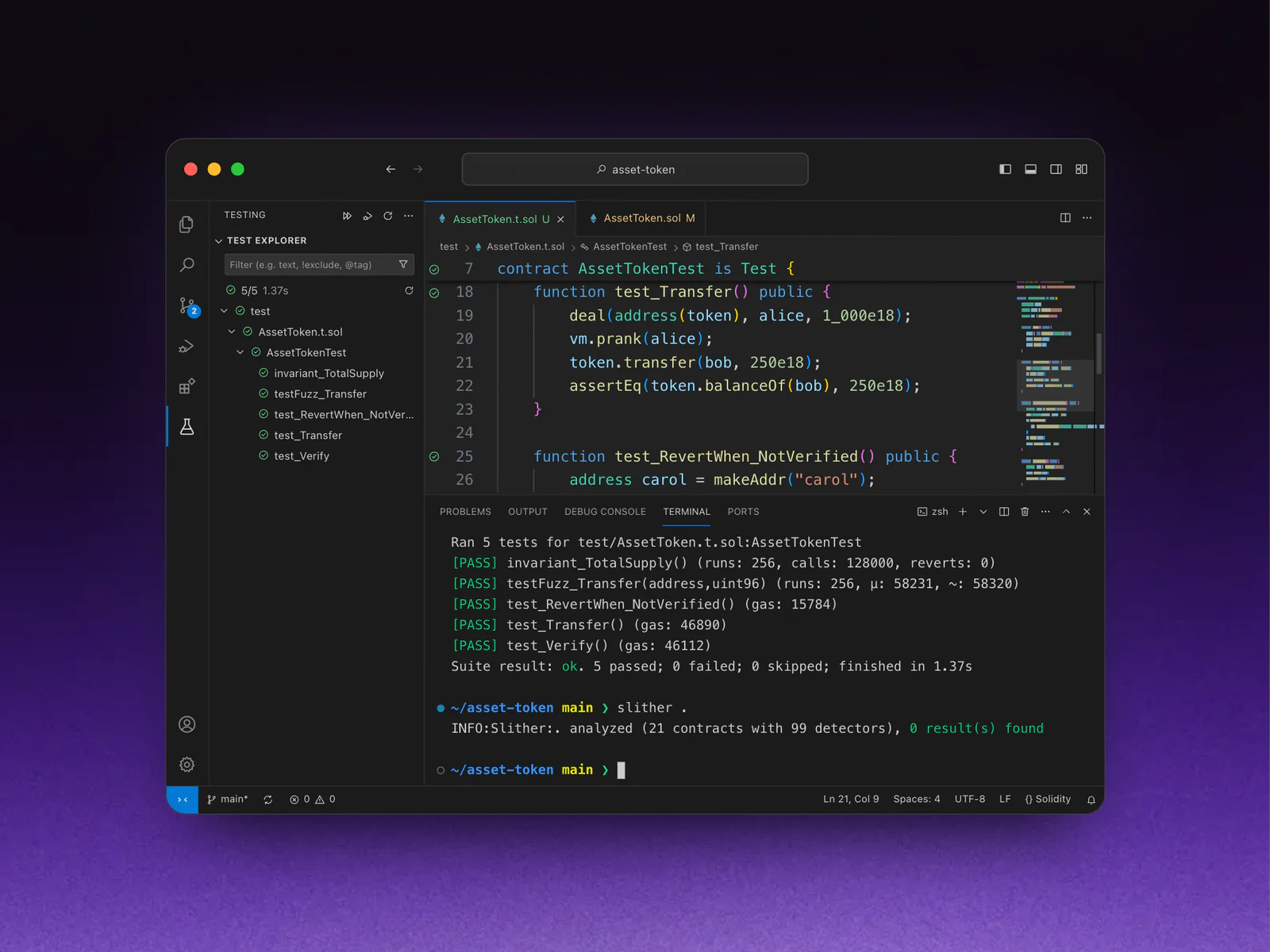
What to include in the Metlabs proposal
- A prioritized scope defining which rules execute on-chain and which data stays in the company’s systems.
- Architecture and journey prototypes connecting contracts, wallets, backend and interface.
- Code with tests and peer review, prepared for external review of the agreed version.
- Documentation and administration handover, with owners for deployment, keys and maintenance.
The work follows the phases described in our blockchain development service: discovery, architecture and design, iterative development, and validation before release. We agree on the first journey to build and its acceptance criteria at the start, so progress can be checked against a working delivery. External audits, specialist integrations and ongoing support are scoped in the proposal.
To discuss the scope with Metlabs, share the asset or process, its users, existing systems and the operations the first release must support. This gives the team a basis for identifying dependencies and preparing a proposal you can compare with those of other providers.
What a comparable proposal should include
Give providers the same requirements document: users, operations, existing systems, the planned network and constraints. If the network is undecided, include its selection in the architecture phase. A useful estimate explains its assumptions as well as its price.
- Milestones and acceptance: how each operation will be demonstrated, including errors, permissions and recovery from failures.
- Separate costs: development, external review, third-party services, infrastructure and maintenance. Identify which items depend on usage.
- Control and continuity: code ownership, repository access, key administration and the process for switching providers.
- Evidence: authorized references and an explanation of the work the team performed. A mockup or sales presentation does not establish production results.
The right blockchain development company is the one that says who answers for each part after launch
Technology lists look alike across providers, because languages, token standards and testing tools are shared across the sector. What distinguishes a proposal is the boundary of responsibility it draws: which components it delivers, which third-party services it takes on, who keeps the administrative keys and who will handle an incident or a network upgrade once the project has closed. Two quotes for the same amount can leave the client with very different responsibilities.
These criteria structure the comparison, but they do not replace checking who will do the work. A reference only counts if it matches a comparable engagement, the team that will be assigned and comes with permission to verify it; a recognized name or a sales presentation does not establish production results, whoever the provider.
The choice depends on what you need to build and who will be responsible for each part of the system. To compare a Metlabs proposal, tell us about your project and we will review its scope, technical decisions and required integrations. A well-defined agreement makes delivery assessable and helps sustain the product after launch.
Frequently asked questions
Got a blockchain project in mind?
From idea to product, strategy and technology must move forward together.