Incident readiness for fintech
We rehearse with you how your team decides when an operation goes down. We work through a specific scenario to test coordination, the information available and recovery criteria.


An incident affects an operation, not just a system
When a platform stops processing payments, technical decisions depend on operational conditions. Teams may need to restrict functions, coordinate with a provider or establish which transactions completed.
Plan an incident exercise

What your team receives
Exercise plan
It describes the scenario, objectives, participants and the events that will be introduced.
Decision record
It records what information the team had, what actions it took and which dependencies surfaced.
Improvement plan
It lists the gaps found, their owners and how each action will be confirmed as closed.
Scenarios that are rehearsed
A useful scenario affects a specific product operation. These are common scenarios by sector.
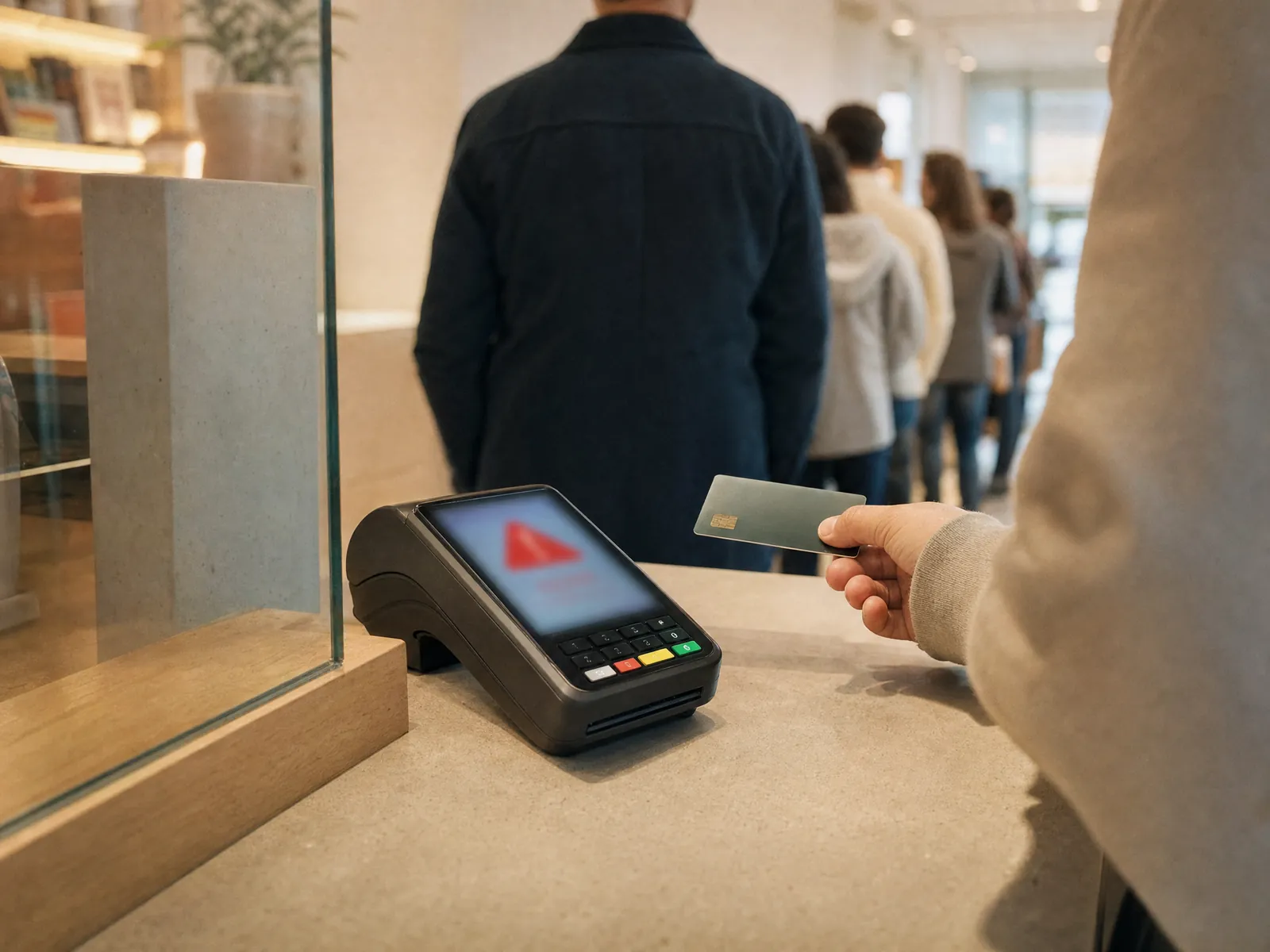
Payment outage
The payment provider stops responding and pending transactions pile up. The team must decide whether to retry, pause or notify customers.
Blockchain for Banking & Finance
Claims portal down
Customers cannot log in to the portal. The exercise tests who communicates the incident and how the request queue is recovered.
Blockchain for Insurance & Insurtech
Compromised signing key
A signing key is exposed. The team rehearses pausing operations, rotating keys and analysing on-chain movements.
What we analyse
A readiness exercise tests those decisions with technology, operations, management and compliance. Scope should distinguish a tabletop exercise from a technical test and from handling a live incident.
A scenario that requires decisions from your team
The scenario starts from a specific operation: compromise of an administrative account, provider unavailability, loss of access to a key or a reconciliation discrepancy.
The exercise introduces facts progressively and records who decides, which information they need and how they coordinate action. Its purpose is to identify dependencies, ambiguities and decisions without a clear owner.
Restore service and verify its state
Restarting a system does not establish that data and operations are consistent. The plan should cover restoration, record validation and transaction reconciliation before resuming the affected service.
Recovery objectives, RTO and RPO, need to reflect business impact. Technical validation requires agreed tests; a tabletop exercise alone does not demonstrate that those objectives are met.
Turn observations into procedure changes
Outputs should capture decisions, missing information, dependencies and actions with owners. The next exercise should verify action closure and update affected procedures.
When the exercise forms part of a DORA project, its evidence connects with the institution’s resilience work. Readiness and exercises have a different scope from responding to a live emergency.
What is prepared before an incident
Readiness covers the people, criteria and information the team will need during an interruption. Each element builds on public guidance and, where applicable, on DORA.
| Element | What it includes | Reference |
|---|---|---|
| Response procedure | Roles, activation criteria, escalation and communication internally, with providers and with clients. | NIST SP 800-61r3 |
| Classification | Criteria to assess impact and severity. For entities subject to DORA, the major incident thresholds. | DORA, Art. 18; Delegated Regulation (EU) 2024/1772 |
| Reporting | Deadlines, content and owners of the mandatory notifications that apply to the entity. | DORA, Art. 19; Delegated Regulation (EU) 2025/301 |
| Tabletop exercise | A scenario with facts introduced in stages to practise decisions with technology, operations, management and compliance. | NIST SP 800-84 |
| Recovery | Recovery objectives, restoration order, data validation and the criterion for resuming operations. | DORA, Arts. 11 and 12 |
| Lessons learned | Changes to procedures, controls and tests based on what was observed in the exercise or in an incident. | DORA, Art. 13; NIST SP 800-61r3 |
How we work
The work is tied to an identified version and defined operations, from preparation through to checking changes.
We choose the affected operation, set the starting assumptions and define what the exercise must test.

We bring in the participants, prepare the events to be introduced in stages and agree what will be observed.

During the session we record each decision, how long it takes and which information it relies on.

We turn what we observed into changes with an owner and a date, and set when to repeat the exercise.


Tabletop, functional exercise or recovery test
Each format tests a different part of readiness. NIST SP 800-84 describes tabletop and functional exercises; the technical test covers what neither of them proves.
| Criterion | Tabletop exercise | Functional exercise | Technical recovery test |
|---|---|---|---|
| Format | Guided discussion of a staged scenario | Teams execute procedures in a controlled environment | Actual restoration of systems or data |
| What it validates | Roles, information and decision criteria | Coordination, tools and execution times | Recovery objectives and data state |
| Limitation | Does not execute procedures | Requires an environment and more preparation | Does not test business decisions |
Incident readiness FAQ
Answers on what a tabletop exercise is, what it demonstrates, how it relates to DORA and where its limits are.
Plan an incident exerciseWhat is a tabletop exercise?
A session in which the team responds to a scenario that unfolds in stages, without touching the systems. It checks whether owners, information and decision criteria exist and work before a real incident.
Does it include technical recovery testing?
It can include backup verification or a restore in a test environment when agreed. A tabletop exercise on its own does not prove that a restore works.
Does it help with DORA?
DORA requires incident management and reporting processes, response and recovery plans, and testing them at least once a year (Articles 11 and 17). The exercise produces evidence of that testing; compliance is assessed by the entity.
Does it replace an incident response service?
No. It prepares the team and its procedures. Handling an incident in progress requires a response service agreed in advance, with its contacts, scope and availability.
Related services for your product
Each service answers a different question. Choose the one that fits your system, or combine several when an operation spans different components.

Smart contract audits
We audit your contracts' code, permissions and economic logic before deployment, with a report by severity and verification of every fix.

Fintech penetration testing
We test your applications and APIs the way a user trying to bypass their permissions would, focusing on payment logic and integrations, and retest after every fix.

Security architecture
We model the threats to an operation before it is built and turn each chosen control into a requirement your team can implement and test.

Cloud and identities
We trace every path into production from identity to resource to find excess permissions, exposed secrets and uncontrolled deployments.

Tokenization security
We assess how a tokenized asset is issued, signed, transferred and reconciled, from contract roles to key custody.

DORA services
We translate DORA's five pillars into technical work on your systems, from ICT risk management to resilience testing and third-party providers.
Choose the incident to rehearse
Choose an operation whose disruption would require several teams to coordinate. Its owners and procedures provide the basis for an exercise that produces concrete actions.