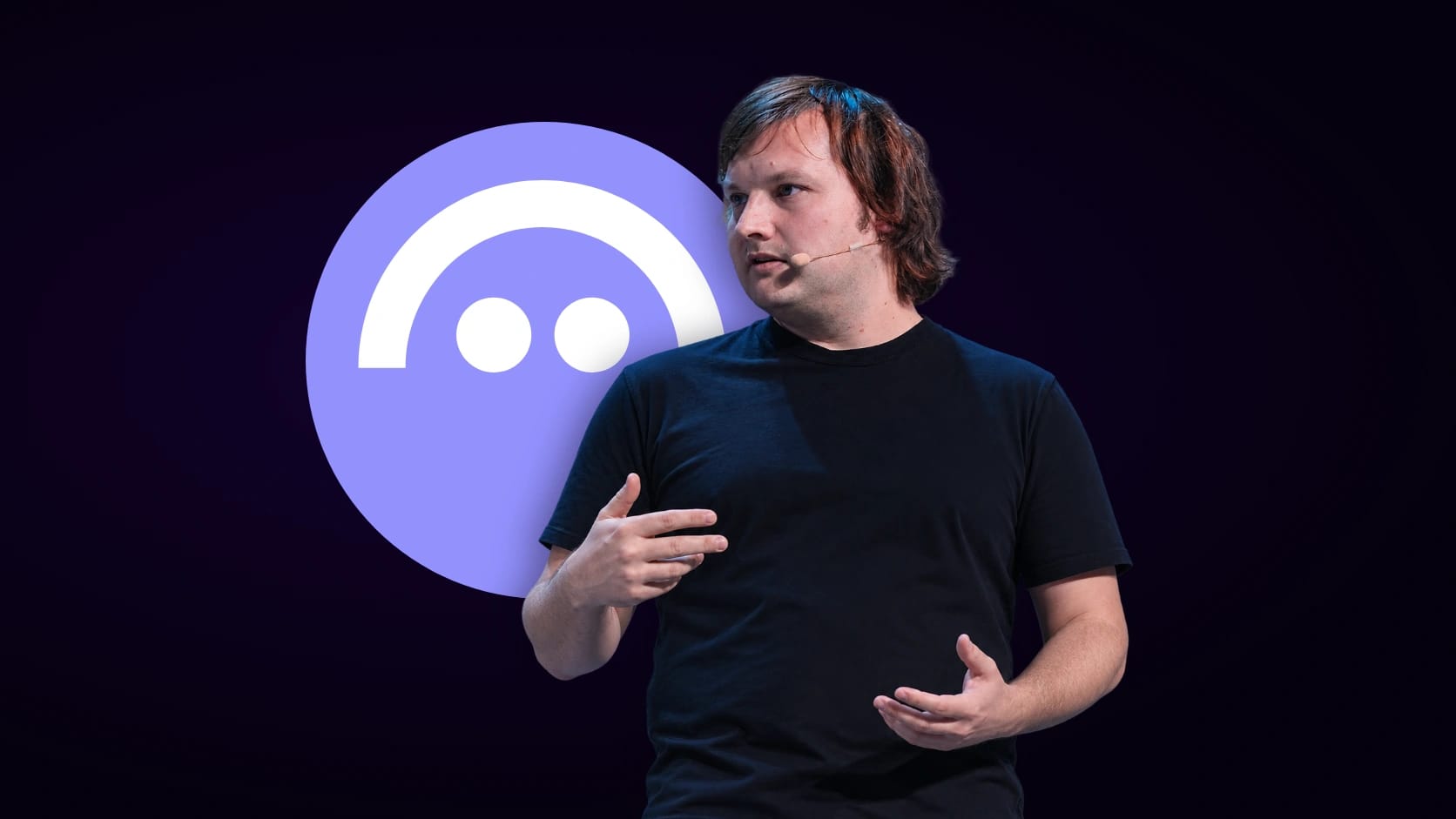
Who Is Sergey Nazarov, Chainlink Co-Founder and CEO?
Who is Sergey Nazarov, how he identified the oracle problem, and why Chainlink expanded from external data into cross-chain financial infrastructure.
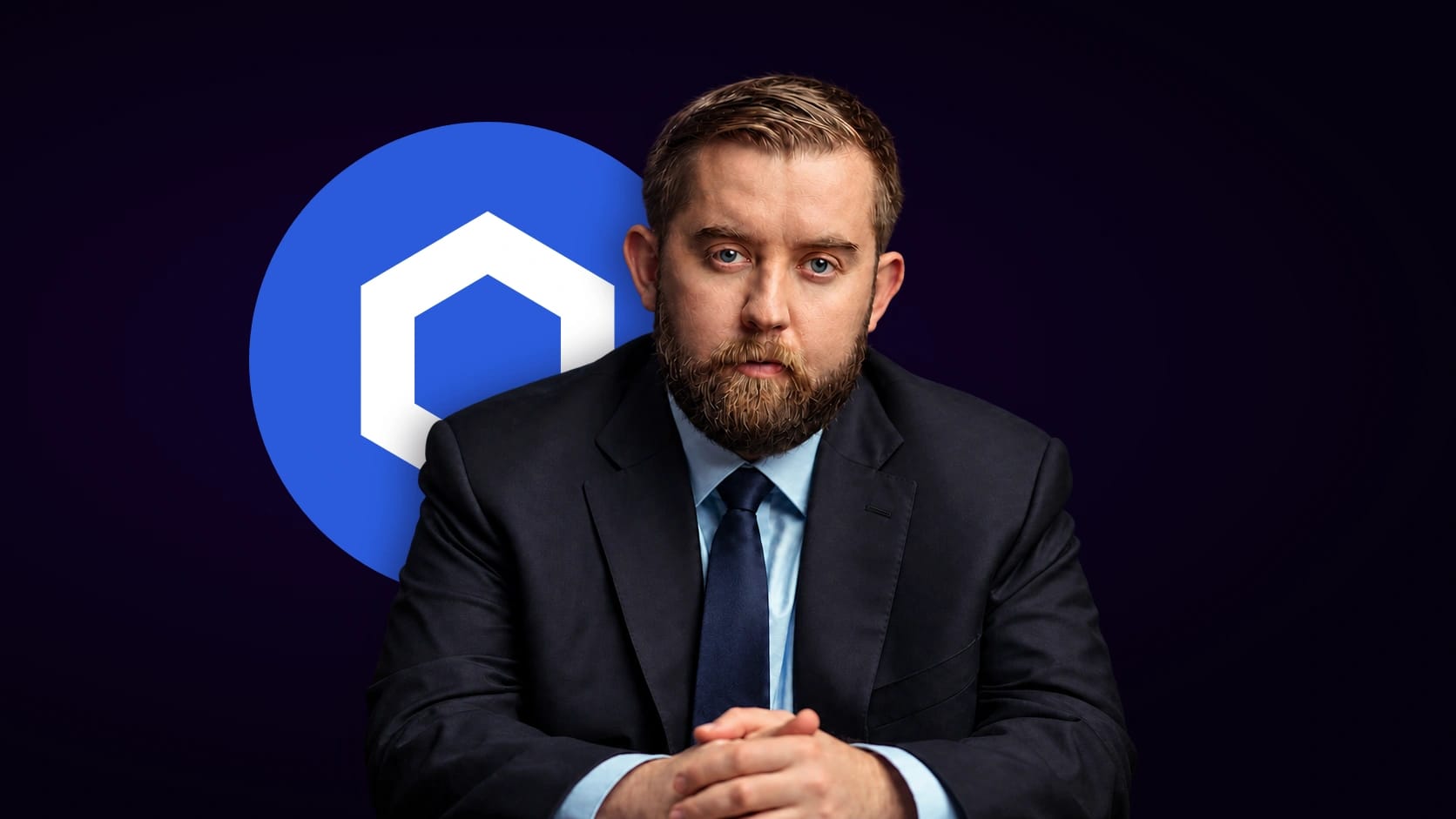
Sergey Nazarov is a cofounder of Chainlink, an oracle network providing external information to smart contracts. His work starts from a limitation that is easy to describe: a contract can execute a rule precisely and still make a poor decision if its input data is wrong.
Giving that boundary its own infrastructure deserves to be considered an important contribution. Data is less visible than the contract, but can determine the outcome of an operation. Nazarov's trajectory, alongside Steve Ellis and Ari Juels, shows how oracles became part of application design.
Who is Sergey Nazarov?
Sergey Nazarov is a co-founder of Chainlink and CEO of Chainlink Labs. His work addresses a structural limitation of smart contracts. On-chain code can execute rules with cryptographic assurance, but it cannot independently know an asset price, an event outcome, or the state of a banking system.
Nazarov's answer was a decentralized oracle network. Instead of relying on one API or company, multiple operators retrieve, validate, and aggregate information before delivering it to a contract. Chainlink turned that middle layer into infrastructure and later expanded its scope to verifiable computation and communication across networks.
What did Nazarov build before Chainlink?
According to his official biography, Nazarov has worked in decentralized technology since 2010. Before Chainlink, he helped build an early blockchain-based messaging application and Secure Asset Exchange, an early decentralized marketplace. Those projects exposed a recurring constraint. Recording ownership was only one part of making digital agreements useful.
A useful decentralized application usually needs facts that do not exist on its host network. Insurance needs weather data. Markets need prices. Tokenized assets depend on identity, reserves, and post-trade systems. When all that information enters through one gateway, verifiable code inherits a single point of failure.
Those products and his collaboration with Steve Ellis provide the useful thread through his career. The recurring problem was connecting digital agreements to information that still lived outside the blockchain.
Who founded Chainlink with Sergey Nazarov?
Sergey Nazarov and Steve Ellis are Chainlink's co-founders. Nazarov serves as CEO of Chainlink Labs, while Ellis serves as CTO. Cornell Tech professor Ari Juels is not presented as a company co-founder, but he co-authored the whitepaper and made a central research contribution to the network's security model.
- Sergey Nazarov articulated the connectivity problem and product vision.
- Steve Ellis led engineering and development of the technical infrastructure.
- Ari Juels helped turn the proposal into a formal decentralized oracle design.
The three published the whitepaper on September 4, 2017. It described on-chain contracts for requesting and aggregating responses, node operator software, reputation systems, and a path toward confidential computation. Chainlink reached Ethereum mainnet at the end of May 2019.
What is the oracle problem Chainlink set out to solve?
The oracle problem appears when a deterministic system needs an external fact. Nodes must be able to replay a contract and obtain the same result. If each queries an API independently, responses may differ. A centralized feed solves data delivery but introduces a trust dependency and a possible single point of failure; it does not by itself erase every guarantee of the ledger.
Chainlink separates data acquisition, aggregation, and delivery. An oracle network can combine several data vendors and node operators, discard outliers, and publish a common answer. Security still depends on genuine source and operator diversity, sound incentives, and the application's response to stale or missing values.
That design supports use cases from lending prices to smart contracts for insurance that settle a claim when a verifiable source confirms the triggering event. The oracle does not set the business rule. It supplies the fact that lets the rule execute.
How did Chainlink expand beyond market data?
Chainlink extended the oracle model into networks that perform services off-chain. The 2021 Chainlink 2.0 whitepaper described decentralized oracle networks as a layer for data, computation, automation, privacy, and fair ordering. Its hybrid smart contract model combines on-chain code with outside resources without assigning the whole workflow to one provider.
The experiments published by Swift in 2023 used Chainlink to connect messaging systems with different blockchain networks. These were interoperability tests, not a statement of universal production adoption. For tokenization, they illustrate a practical possibility: coordinating instructions between existing infrastructure and new ledgers. Legal rights in the assets and the quality of the data still need their own controls.
Does Sergey Nazarov own Chainlink?
Nazarov leads Chainlink Labs, the organization that develops technology and tooling for the ecosystem, but that does not make him the owner of every oracle network. Independent operators run nodes, while application teams select acceptable sources, aggregators, and thresholds. Practical control is distributed across software, operators, data providers, and service users.
Decentralization does not remove implementation risk. A configuration with too few nodes, correlated data sources, or opaque emergency controls can concentrate trust. Products moving real value must define latency, deviation limits, update frequency, failure behavior, and operational accountability. Integrating a recognized standard does not replace that design work.
What is Sergey Nazarov's lasting contribution?
His contribution has been to turn external connectivity into a category of infrastructure. Chainlink began with data for contracts and expanded toward cross-network messaging, computation and workflow coordination. That development explains the project more clearly than a cumulative volume figure, which combines different uses and depends on the provider’s methodology.
The product lesson is direct: verifying that information arrived through the intended channel does not prove that the underlying real-world claim is true. Architecture must specify authoritative sources, redundancy, deviation limits and fallback behavior. Upgrade and pause permissions matter too. Those decisions belong in the product design from the start.
If your product needs trusted external data or interoperability, our blockchain development team designs the architecture and takes it to production.

- Chainlink, founder profiles
- Chainlink original whitepaper (2017)
- Sergey Nazarov, Chainlink’s early direction (2017)
- Chainlink, whitepaper 2.0 (2021)
- Chainlink Research, Off-chain Reporting protocol (2021)
- Swift, interoperability experiment results (2023)
- Chainlink Runtime Environment
- Chainlink Labs, team and leadership
Got a blockchain project in mind?
From idea to product, strategy and technology must move forward together.