


Regulatory overview
- Scope
- Federal and financial free zones
- Authorities
- Regulatory index
- Latest regulatory change
 Federal and financial free zones
The United Arab Emirates combines a federal framework with specific regimes in Dubai, DIFC and ADGM. The relevant authority and permission depend on establishment, activity and token classification. Payment services add the central bank’s regulatory perimeter. A digital asset business choosing a location must assess permitted services, eligible clients and obligations outside its home jurisdiction.
In the United Arab Emirates, a digital asset project’s regulation depends both on its activities and on where it operates. The federal framework coexists with VARA supervision in Dubai and the separate financial regimes of DIFC and ADGM. Before choosing a location, a business should determine whether it provides virtual asset services, issues financial instruments or uses tokens for payments: those functions may require different permissions.
For a business considering establishment in the country, the starting point is to connect each function with a responsible entity and regulator. An exchange, custodian and issuer of tokenized fund units do not necessarily follow the same route. This guide explains those distinctions and their implications for authorisation, client rights and operations after launch.
How to determine the framework for a project
Classification starts with the legal right and transaction flows. A fund unit retains its financial characteristics when recorded on a blockchain. A token intended to pay for goods raises different questions from an asset traded on a platform. This distinction identifies the framework to assess before comparing costs, timelines or locations.
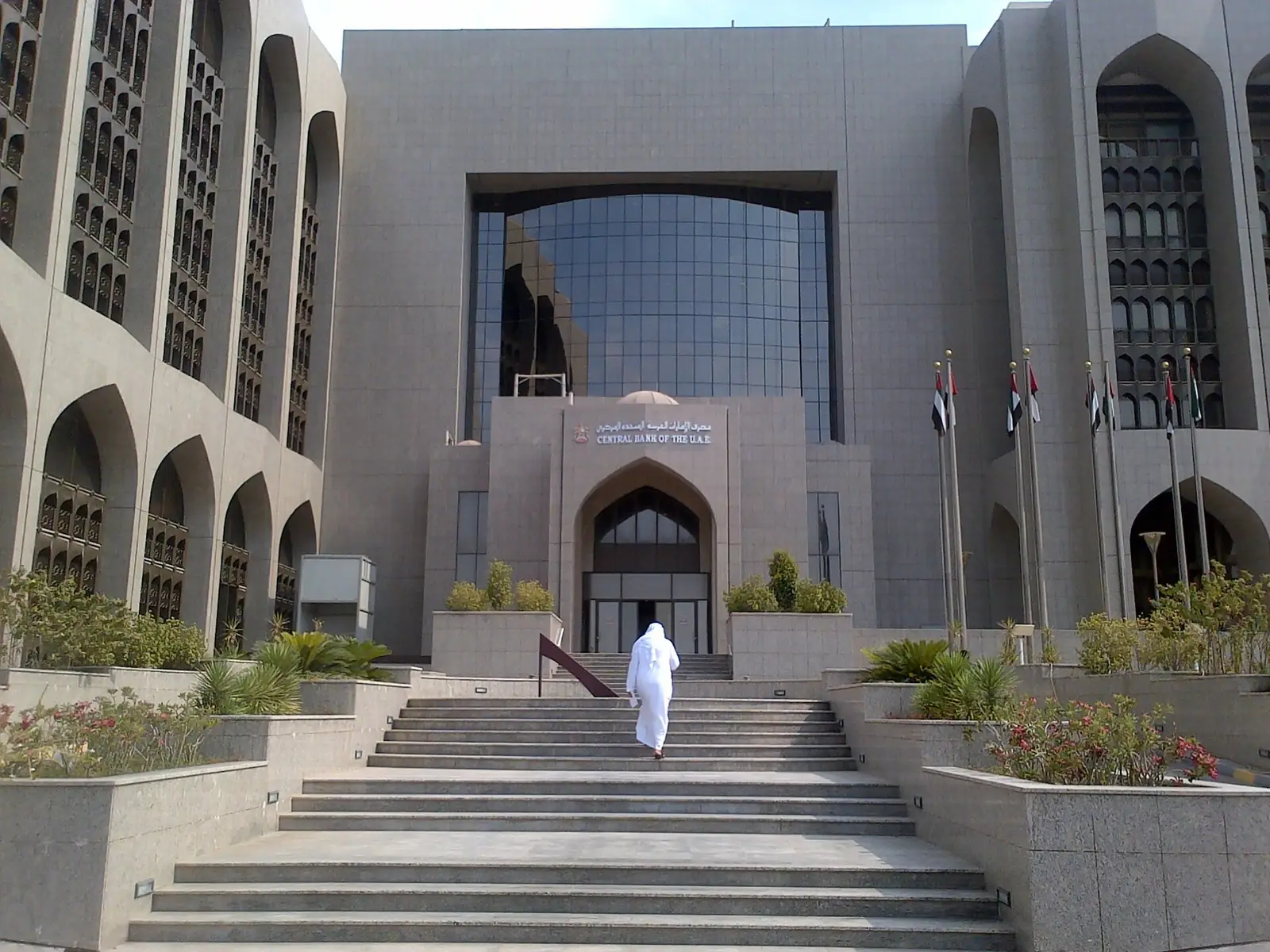
At federal level, the Capital Market Authority, CMA, succeeds the Securities and Commodities Authority, SCA. On 1 January 2026, the Government announced two decree-laws concerning the authority and capital-market regulation. Virtual-asset provisions must be read alongside the responsibilities of the Central Bank of the UAE, CBUAE, and the relevant territorial regimes. Historical references to the SCA do not by themselves describe the current structure.
Which authority supervises each location and activity
The Virtual Assets Regulatory Authority, VARA, regulates virtual asset activities in Dubai, including special development zones and free zones, excluding Dubai International Financial Centre, DIFC. VARA is the regulator for that territory, not a free zone. Dubai Law 4 of 2022 and the Virtual Assets and Related Activities Regulations underpin its licensing regime.
In DIFC, the Dubai Financial Services Authority, DFSA, supervises financial services involving tokens within its rules. In Abu Dhabi Global Market, ADGM, that role belongs to the Financial Services Regulatory Authority, FSRA. ADGM's jurisdiction does not extend to the entire emirate of Abu Dhabi. Outside these centres, the competent federal or local authority must be identified. A centre's authorisation should not be treated as universal territorial permission.
The practical task is to map the whole transaction. Where one entity keeps records, another provides custody and a third distributes the product, the application should explain that allocation and how their permissions fit together. Incorporation, service delivery and client solicitation may occur in different places; none should be assessed in isolation.
What authorisation a project needs to operate
The CMA announced its new federal framework on 13 April 2026. It covers principal and agency dealing, custody, arranging custody and investment transactions, advice, portfolio management and multilateral trading facilities. Five modules address general requirements, conduct, trading systems, anti-money laundering and prudential obligations. The trading module also covers tokenized securities; it does not remove the instrument’s financial classification or the territorial responsibilities described here.
VARA's regulations distinguish activities including brokerage, exchange operation, custody, advice, management and lending. Applicants must identify which activities they will perform and meet both common and activity-specific rules. VARA's public register can be used to check an entity's status and listed services. Preliminary approval or a company's commercial licence should not be represented as final operational authorisation.
In ADGM, financial activities within the regime require an FSRA Financial Services Permission. Its procedure distinguishes initial approval, satisfaction of conditions, incorporation and final permission. DIFC requires DFSA authorisation or a variation of an existing licence when additional services or products require it. In both cases, governance, resources, controls and responsible individuals form part of the supervisory assessment.
Since 12 January 2026, the DFSA framework makes firms responsible for assessing the suitability of the relevant Crypto Tokens, using the criteria and documentation required by GEN 3A.2.1. They must consider token characteristics, regulatory status, market, technology and compatibility with their obligations. Fiat Crypto Tokens receive specific treatment. An internal asset assessment does not replace permission to provide the financial service.
What legal effects asset tokenization produces
The DIFC Digital Assets Law 2 of 2024 addresses property aspects of digital assets, including control and transfer. That recognition must be distinguished from permission to issue assets or provide financial services. In ADGM, the FSRA treats tokens with security characteristics as securities and applies the corresponding categories to derivatives and fund units. Technology does not remove the financial classification of a right.
A tokenization project needs to identify the underlying asset's owner, the investor's right, the issuer's obligations and the formalities required for enforcement. A token associated with real estate does not automatically establish registered title to that property. The contract, holding structure, collateral and law where the property is situated must be assessed alongside issuance and marketing rules.
The ADGM DLT Foundations framework provides a legal structure for certain organisations based on distributed ledgers. Registration is not financial authorisation. ADGM's own guidance excludes foundation activities requiring a Financial Services Permission. A foundation and an authorised intermediary therefore perform different legal functions within a project.

How payments, custody and staking are regulated
The CBUAE Payment Token Services Regulation distinguishes payment token issuance, conversion and custody or transfer. Article 2.7 limits which virtual assets can be accepted as payment for goods and services within its scope. It provides for dirham tokens issued by licensed issuers and a route for foreign tokens from registered issuers when used to buy virtual assets or their derivatives. It does not make every stablecoin a general means of commercial payment.
Anti-money laundering and counter-terrorist financing, customer identification, disclosure and asset protection requirements must be built into the authorised service. VARA prohibits anonymity-enhanced cryptocurrencies and related activities within its regime. Custody requires assessment of key control, asset segregation, continuity and insolvency treatment. Requirements and capital levels are not interchangeable between regulators or activities.
The FSRA announced its final staking framework on 29 April 2026. Its scope and conditions must be assessed where a service involves validation or rewards; a general reference to custody is insufficient. Similarly, soliciting customers in another jurisdiction requires checking its marketing restrictions. A local licence does not in itself provide a passport to offer services abroad.
What to define before choosing a location
Before selecting a jurisdiction, a business should describe its product: represented rights, intended clients, money flows, key control and outsourced functions. This makes it possible to compare regulatory routes for the same business model. It also avoids budgeting for an advisory licence when the operation includes custody, order execution or another additional activity.
Neos Legal’s Chambers 2026 analysis provides context on the coexistence of these frameworks. For the federal regime, Dentons’ June 2026 analysis identifies Decision 4/R.M/2026 and discusses governance, capital and transition. These are interpretative sources: amounts, deadlines and transitional provisions must be checked against the applicable rules and application conditions. The complete text of every module of the new federal framework has not been retrieved for this guide.
Implementation planning should cover authorisation, banking arrangements, asset protection, responsible staff and the capacity to maintain compliance. Tax and international distribution require their own assessment. A regulated route makes it possible to structure a particular activity; its relevance depends on covering the functions and markets the project actually intends to serve.
To understand how this framework applies to your project, discuss your case with our team.
Key takeaways
- VARA supervises Dubai outside DIFC; ADGM and DIFC have their own financial regulators.
- The Capital Market Authority succeeds the SCA in the federal framework from January 2026.
- In DIFC, the January 2026 reform requires firms to assess and document the suitability of the relevant Crypto Tokens.
- A virtual asset licence does not replace payment or securities permissions or an assessment of destination markets.
Regulation by emirate
Blockchain development in the UAE
Regulatory milestones
ADGM launches its spot crypto-asset framework
The FSRA announces its framework for exchanges, custodians and other intermediaries in ADGM following consultation. It is a predecessor of the current, subsequently developed regime.
VARA publishes virtual asset activity regulations
The framework establishes common and activity-specific requirements within VARA’s remit, excluding DIFC.
DIFC Digital Assets Law takes effect
Law 2 of 2024 establishes property rules for digital assets, separate from financial services authorisation.
Announcement of the new federal capital-market framework
The Government announces two decree-laws concerning the Capital Market Authority and capital-market regulation. The date identifies the official announcement.
Updated DIFC Crypto Token rules apply
The DFSA updates its framework, including documented suitability assessments by firms and specific treatment of Fiat Crypto Tokens.
New federal virtual asset framework announced
The CMA announces a regime comprising five modules and eight regulated activities. The announcement does not replace examination of each module’s conditions and transitional provisions.
FSRA announces final staking framework
The FSRA announces specific rules for virtual asset staking services within its remit.
Frequently asked questions
It depends on the functions performed. Developing technology for another party must be distinguished from controlling client assets, executing orders, acting as an intermediary or providing payment services. The actual activity and jurisdiction determine the perimeter; calling a business a software company does not establish an exemption.
A single figure should not be used. Requirements depend on the regulator, activity, assets and permission conditions. Budgeting should distinguish capital, fees, guarantees or insurance and operating resources, using the current rules for the chosen licence.
It should not be interpreted as universal territorial permission. Authorisation concerns a particular entity and activities under the relevant framework. Providing services or soliciting clients outside that scope requires assessment of destination rules, marketing restrictions and any further permissions. A group’s location does not by itself expand the licence.
Registration does not replace a Financial Services Permission. ADGM’s guidance excludes foundation activities requiring that permission. Subsidiaries may conduct lawful activities with the necessary licences, but each entity needs its own regulatory assessment. Protocol governance and the entity providing custody or intermediation should therefore be analysed separately.
No. VARA’s public register distinguishes in-principle approval, or IPA, from a VASP licence. An IPA holder cannot start operations or service clients. It must complete the requirements and obtain the relevant licence, whose specific activities and conditions must then be checked.





